5 Áo Dài Fitting Problems — and How to Fix Them
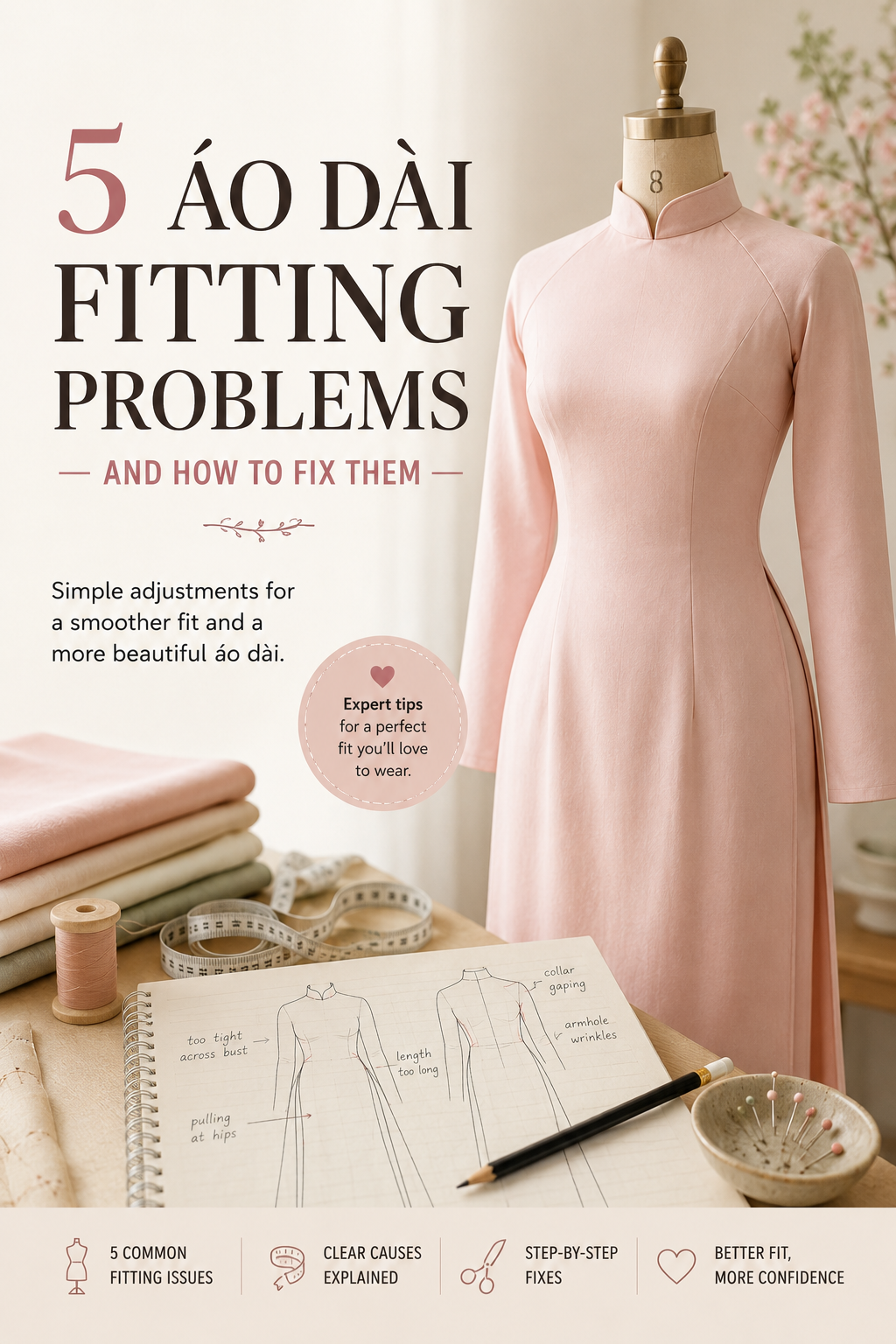
Áo Dài is one of those garments that looks beautifully simple… until you actually try to fit one.
Because a traditional Vietnamese Áo Dài sits close to the body through the bust, waist and hips, even a small fitting issue can suddenly become very noticeable. Wrinkles appear. The collar starts misbehaving. The side seams pull. And you find yourself staring in the mirror wondering which part of the pattern offended you.
The good news? Most Áo Dài fitting problems are surprisingly fixable.
Whether you're sewing an Áo Dài from a pattern, adjusting a ready-made dress or making your first Vietnamese traditional dress, here are five common fit problems — and what you can do about them.
1. Wrinkles or Pulling Across the Bust
What it looks like:
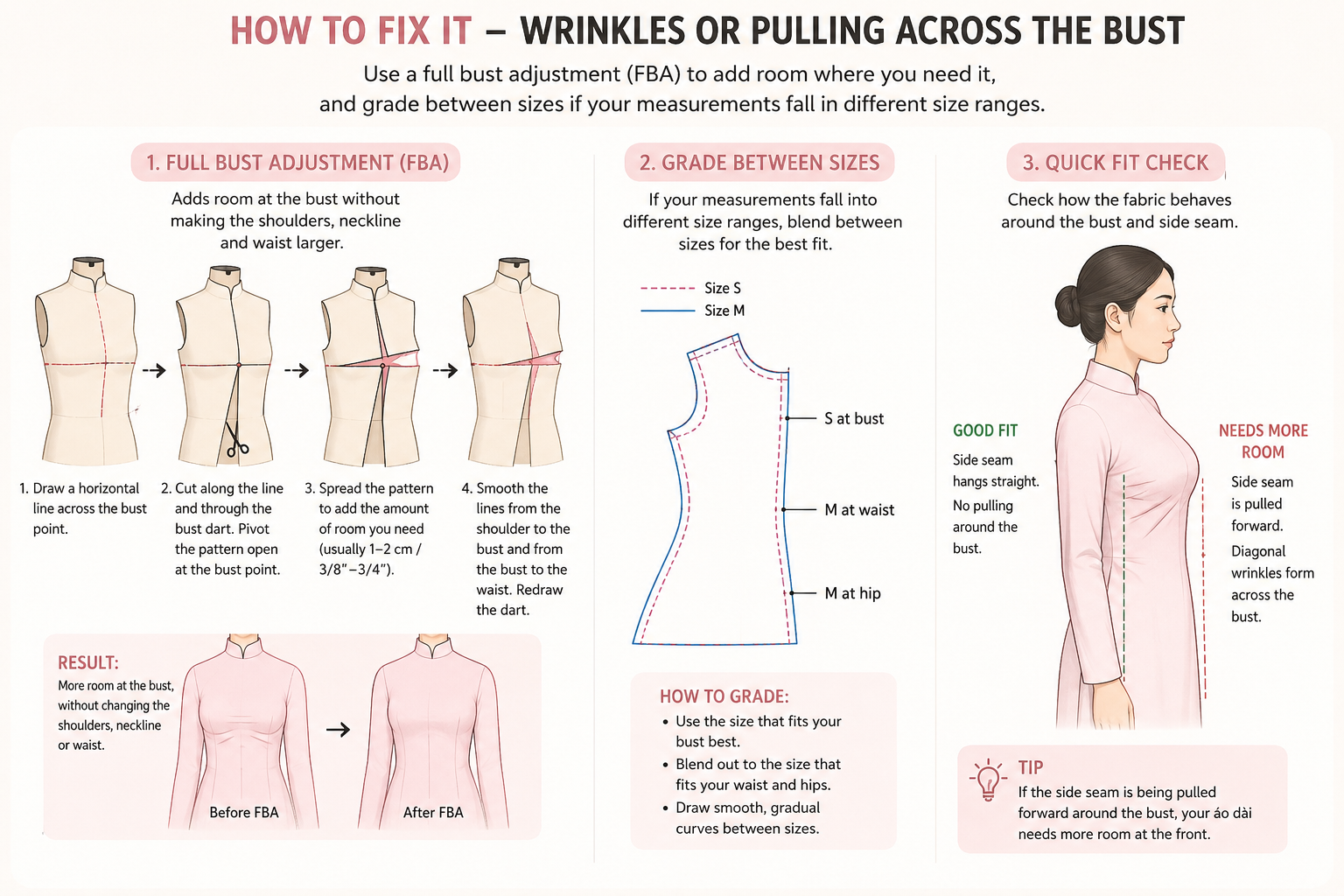
You see diagonal wrinkles running from the bust toward the side seam, armhole or waist. The fabric may also feel tight across the chest.
This usually means there isn't enough room through the bust.
Because an Áo Dài is meant to have a slim silhouette, it's tempting to remove too much ease here. But fitted doesn't mean skin-tight. You still need enough room to breathe, move your arms and, ideally, eat lunch.
How to fix it
If the rest of the Áo Dài fits well, you may need a full bust adjustment (FBA) rather than simply going up a size.
A full bust adjustment adds room where you actually need it without making the shoulders, neckline and waist unnecessarily larger.
Also check your bust measurement against the pattern's finished garment measurement. If you're between sizes, you may need to grade between sizes rather than choosing one size for the entire garment.
Quick fit check: Put your Áo Dài on and look at the side seam. If it's being pulled forward around the bust, that's another clue that you need more room at the front.
2. The Áo Dài Collar Is Gaping or Standing Away From the Neck
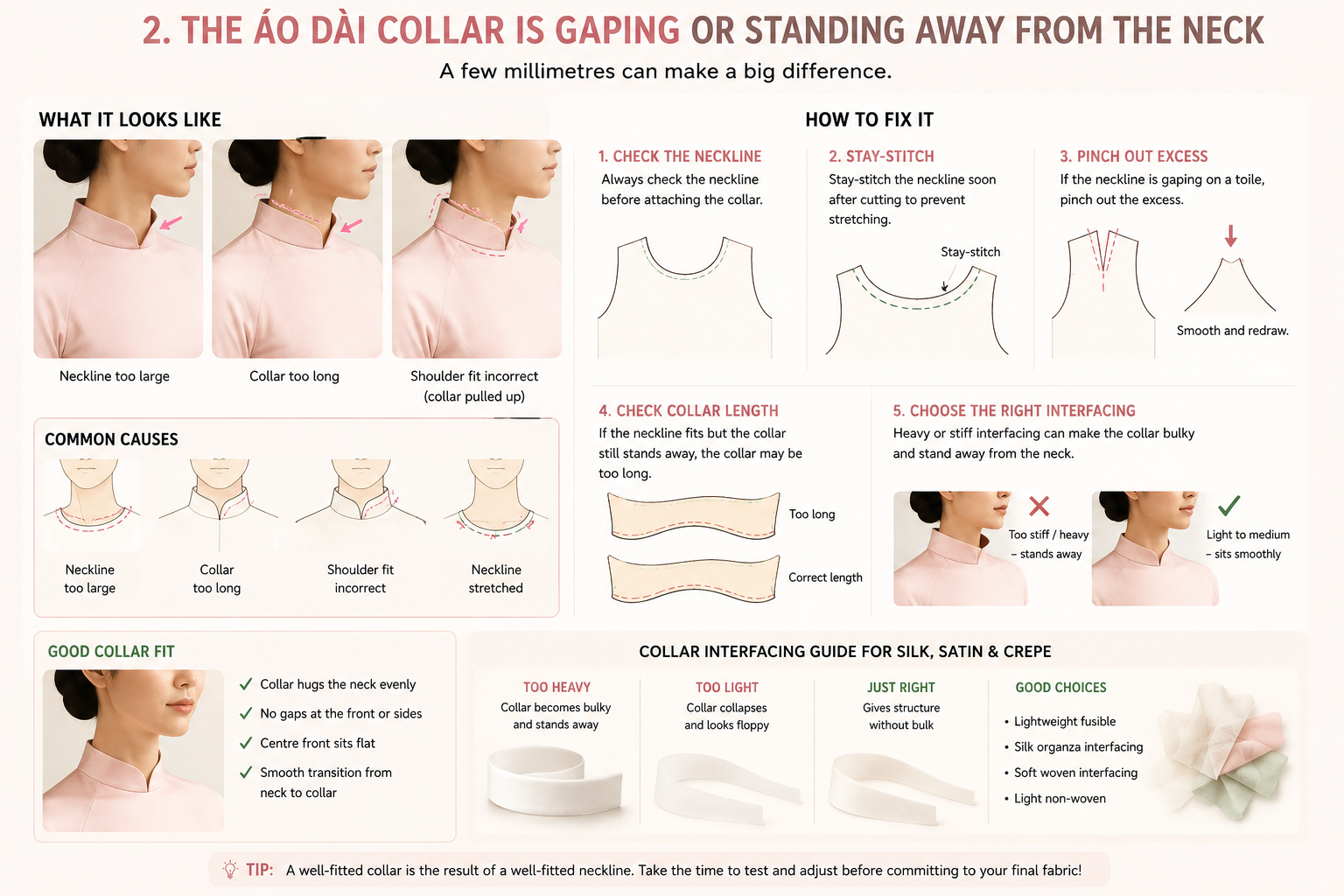
The high collar is one of the most recognisable features of a traditional Áo Dài, so when it doesn't sit nicely, you notice it immediately.
A collar that gaps away from the neck can be caused by several things: the neckline may be too large, the collar may be slightly too long, the shoulder fit may be incorrect, or the neckline may have stretched during sewing.
And yes, a few millimetres can make a difference here.
How to fix it
First, check the neckline before attaching your Áo Dài collar.
Stay-stitching the neckline soon after cutting can help prevent delicate fabrics from stretching while you work.
If you're making a toile or muslin and the neckline is already gaping, pinch out the excess and transfer that adjustment back to your pattern.
If the neckline fits but the collar itself is standing away, check the collar length and interfacing. Heavy or overly stiff interfacing can make a delicate silk Áo Dài collar look bulky.
For lightweight fabrics such as silk, satin or crepe, choose an interfacing that provides structure without turning your collar into a lampshade.
3. Horizontal Wrinkles Around the Waist or Back
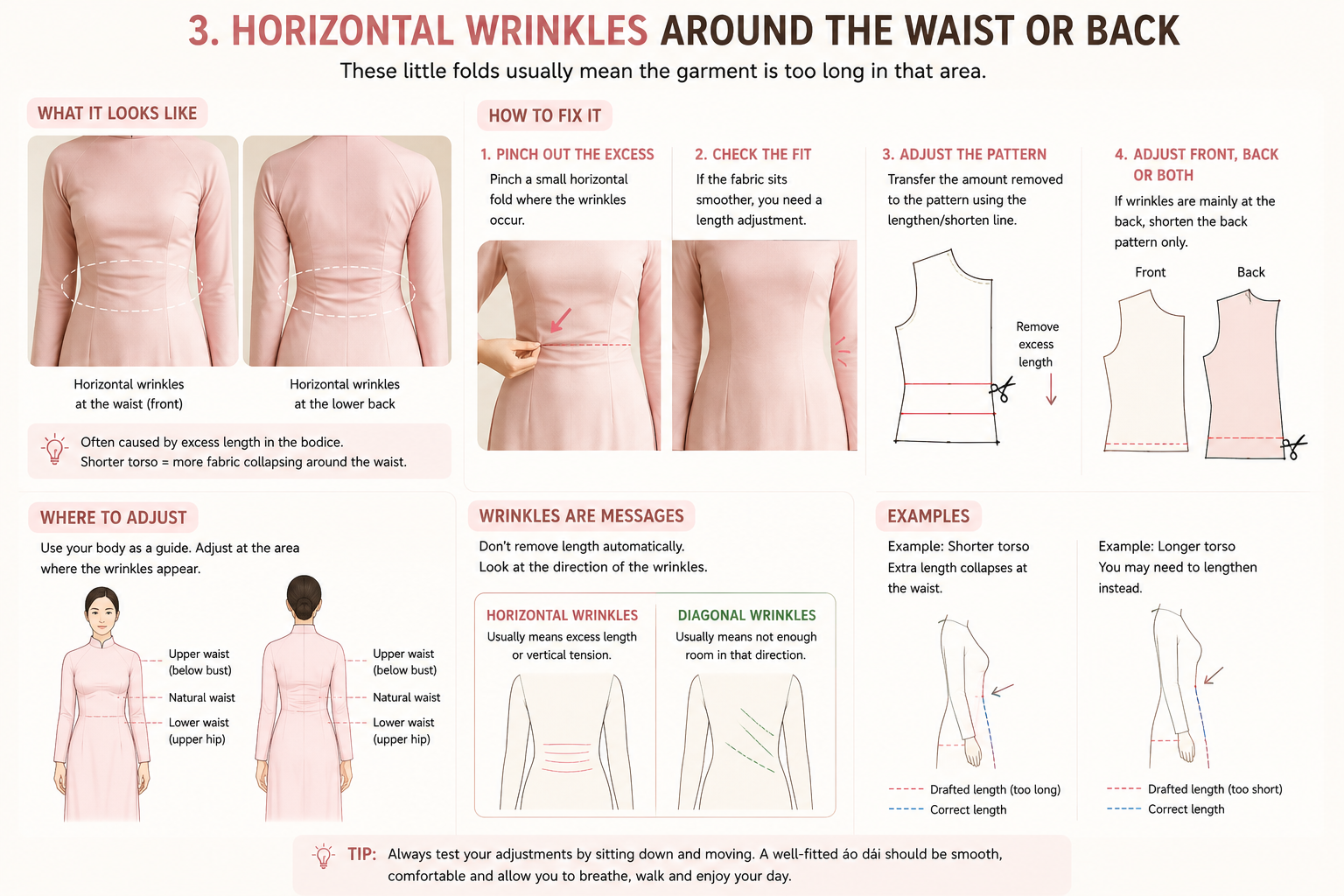
You put on your Áo Dài and suddenly there are little horizontal folds gathering around your waist or lower back.
This is a very common Áo Dài fitting issue, particularly because the garment is so closely fitted through the torso.
Horizontal wrinkles often mean the garment is too long in that area.
For example, if you have a shorter torso than the pattern was drafted for, excess length can collapse around the waist.
How to fix it
Try pinching out a small horizontal fold where the wrinkles occur.
If the garment immediately sits smoother, you probably need a length adjustment to the bodice.
Transfer the amount you removed to your pattern using the lengthen/shorten line, keeping your grainline and side seams aligned.
If the wrinkles are mainly at the back, you may only need to adjust the back pattern rather than shortening the entire Áo Dài.
But don't automatically remove length whenever you see wrinkles.
Wrinkles are basically fabric sending you little messages. Their direction matters.
Horizontal wrinkles often indicate excess length or vertical tension, while diagonal wrinkles usually point toward an area where the garment needs more room.
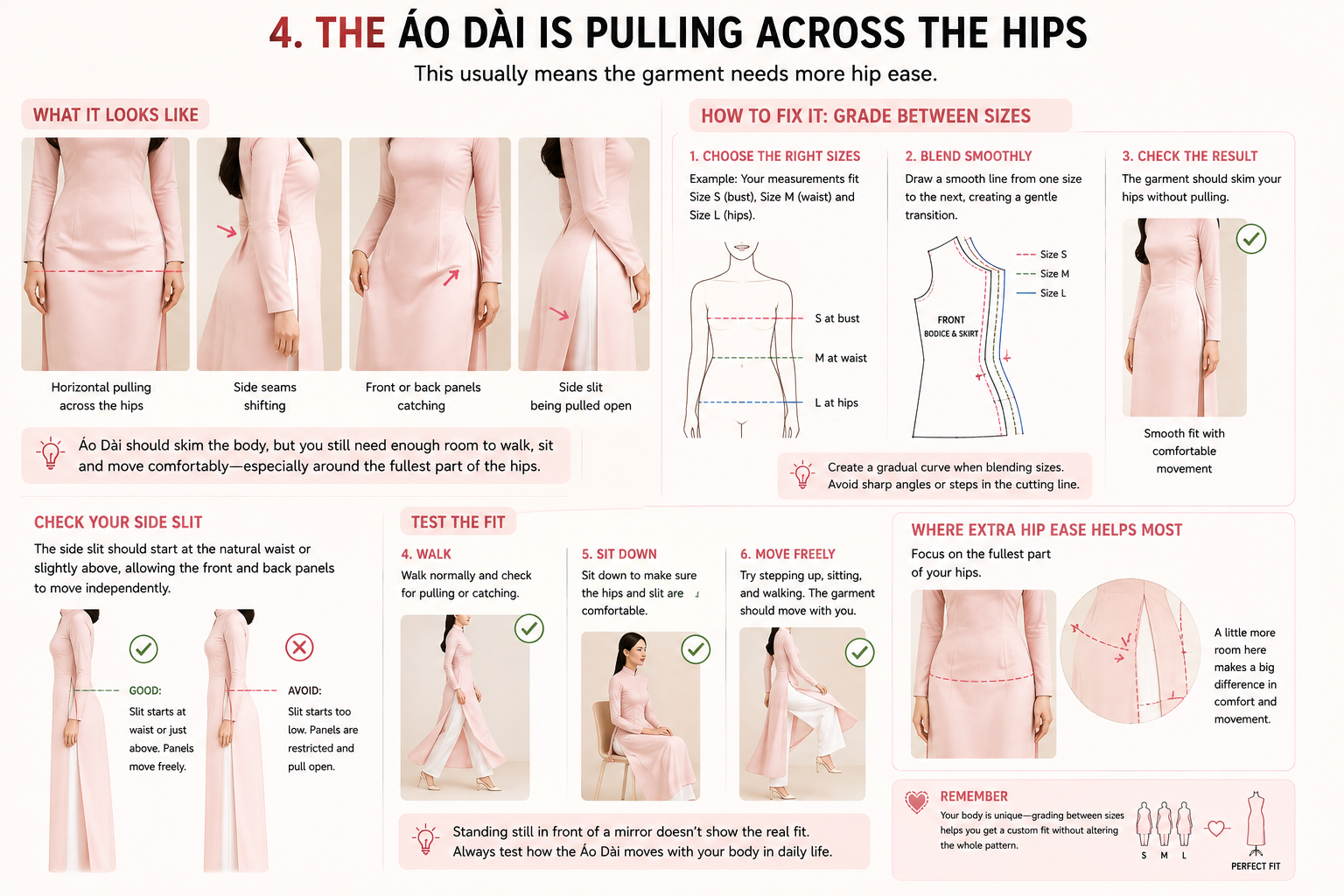
4. The Áo Dài Is Pulling Across the Hips
This one becomes particularly obvious when you walk.
You may notice horizontal pulling across the hips, the side seams shifting, the front or back panels catching instead of falling smoothly, or the side slit being pulled open.
Usually, the garment simply needs more hip ease.
Áo Dài should skim the body, but there still needs to be enough room for movement — especially around the fullest part of the hips.
How to fix it
If your bust and waist fit but your hips need a larger size, grade between sizes on your Áo Dài pattern.
For example, you might use a size S through the bust, blend into M at the waist and then L through the hip.
That's completely normal.
Bodies don't come in pattern-size increments. Very inconsiderate of them.
Create a smooth transition between the sizes rather than suddenly jumping from one cutting line to another.
Also check where your Áo Dài side slit begins. The slit should allow the front and back panels to move independently rather than restricting your stride.
And don't forget to test the fit sitting down.
Standing perfectly still in front of a mirror is, unfortunately, not how most of us spend Tết.
5. Wrinkles Around the Armhole or Shoulders
A beautifully fitted body with a badly fitting shoulder can make the whole Áo Dài feel wrong.
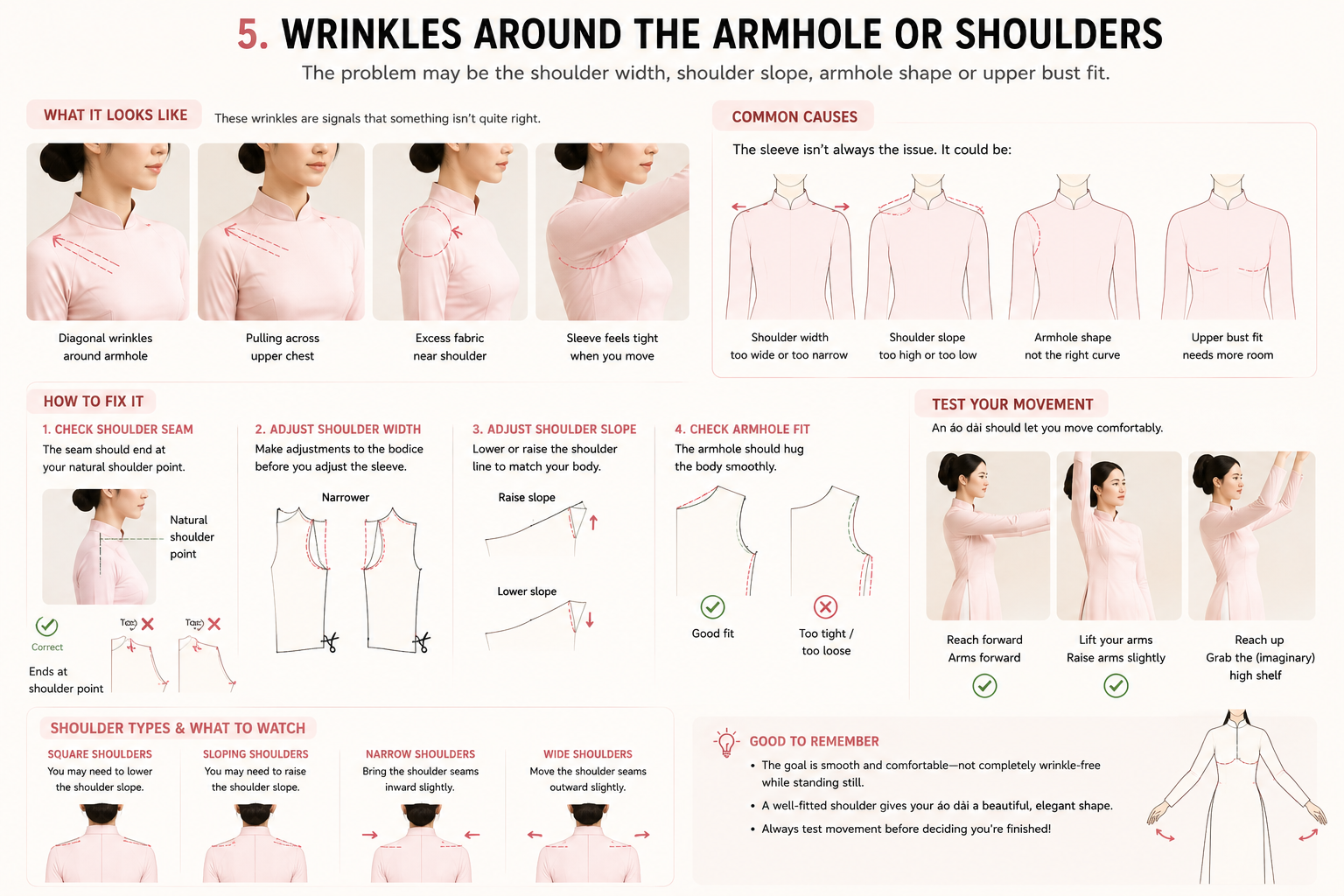
You might see diagonal wrinkles around the armhole, pulling across the upper chest, excess fabric near the shoulder or sleeves that feel restrictive when you move your arms.
The problem isn't necessarily the sleeve.
It could be the shoulder width, shoulder slope, armhole shape or upper bust fit.
How to fix it
Start by checking where the shoulder seam ends.
Ideally, it should sit around your natural shoulder point rather than extending too far down your arm or pulling inward toward your neck.
If your shoulders are narrower or wider than the pattern, make a shoulder adjustment before altering the sleeve.
You may also need to adjust the shoulder slope if you have particularly square or sloping shoulders.
And here's an important one: test your movement.
Reach forward. Lift your arms slightly. Pretend you're grabbing something from a suspiciously high shelf.
An Áo Dài should be fitted, but you should still be able to move comfortably.
Removing every tiny wrinkle while standing still can sometimes create a garment that's impossible to actually wear.
The Secret to a Better-Fitting Áo Dài? Make a Toile
I know. You want to cut into the beautiful silk immediately.
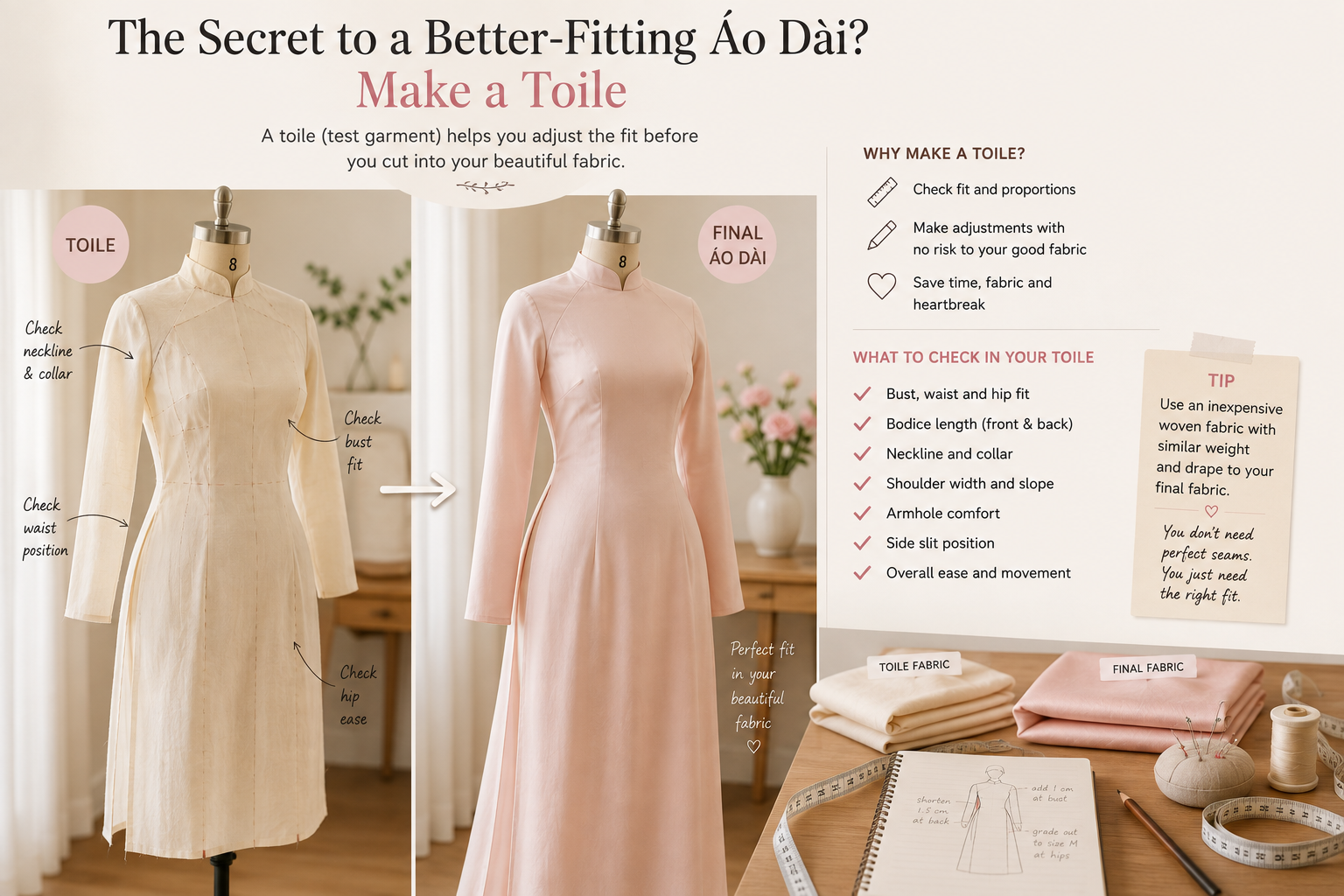
But if you're using a new Áo Dài sewing pattern, especially for a fitted style, making a toile first can save you a considerable amount of pain later.
Use an inexpensive woven fabric with a similar weight and drape to your final fabric. You don't necessarily need to finish every seam or make the entire garment beautifully.
You're checking the important things:
Bust, waist and hip fit
Shoulder width
Bodice length
Neckline and collar fit
Armhole comfort
Side slit position
Overall ease and movement
Make your alterations on the toile, transfer them to your Áo Dài pattern, and then introduce the scissors to your expensive fabric.
Silk deserves that level of respect.
One Last Áo Dài Fitting Tip
Don't try to remove every wrinkle you see.
Áo Dài is a close-fitting garment, but it's still clothing — not vacuum packaging.
You need a little ease to breathe, sit, walk and move comfortably. The goal is a smooth silhouette that follows your body without pulling or restricting movement.
And remember that everyone's proportions are different. You might need one size at the bust, another at the waist and another at the hips. You may need to shorten the torso, adjust the shoulders or add extra room through the bust.
That's not a problem with your body or the pattern.
That's simply pattern fitting.
Once you've made those small adjustments, you'll have an Áo Dài pattern that's customised to you — which makes the next one much easier.
And let's be realistic.
There is always a next Áo Dài.
