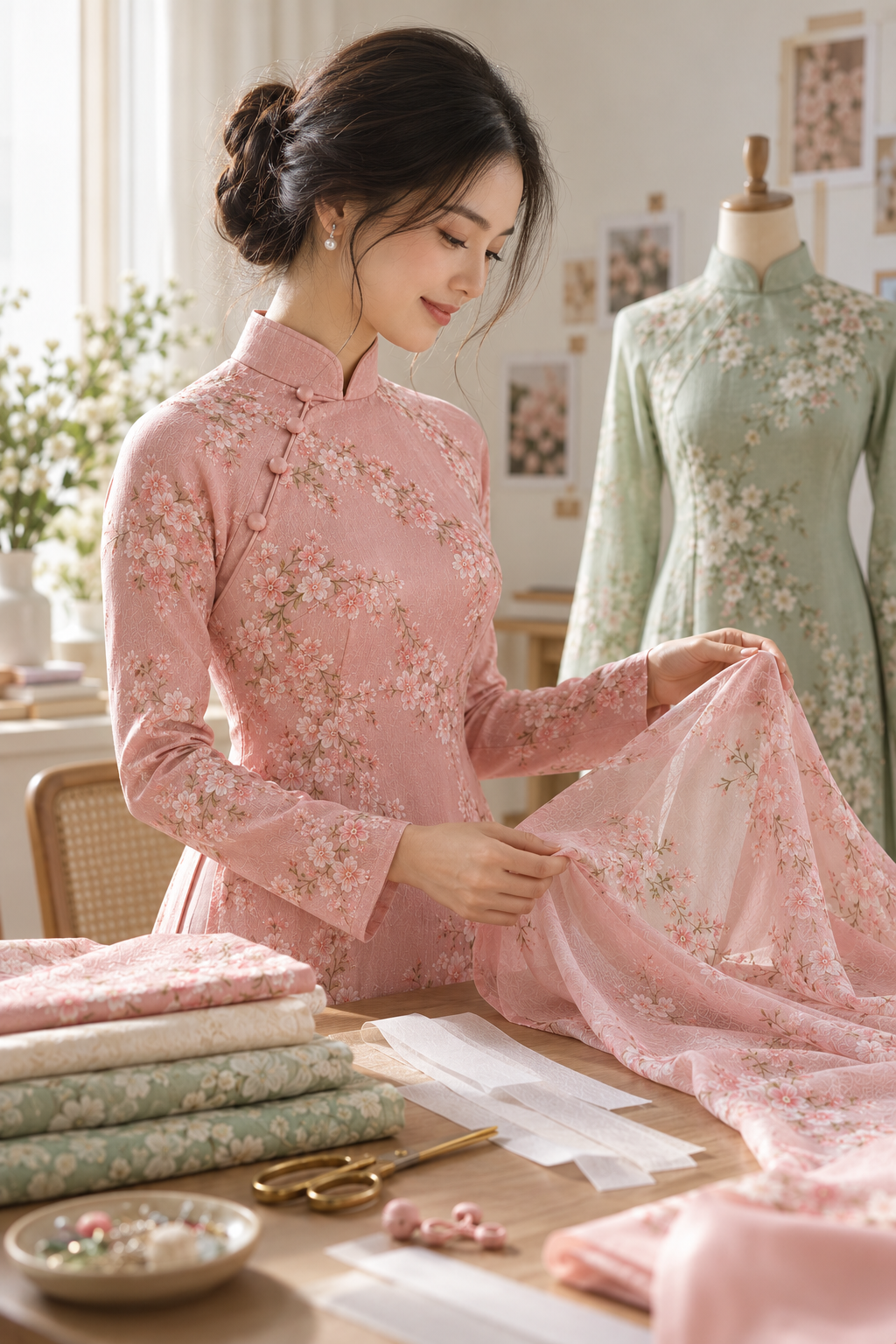
Interfacing for Áo Dài: What You Should Use
If you've ever sewn an Áo Dài, you've probably spent a good amount of time choosing the perfect fabric. But what about interfacing? It's one of those little things we don't think much about until something goes wrong.
A collar that refuses to stand properly, a neckline that stretches out of shape, or a button placket that looks a little too floppy. Sometimes, the problem isn't your sewing. It's simply the interfacing—or the lack of it.
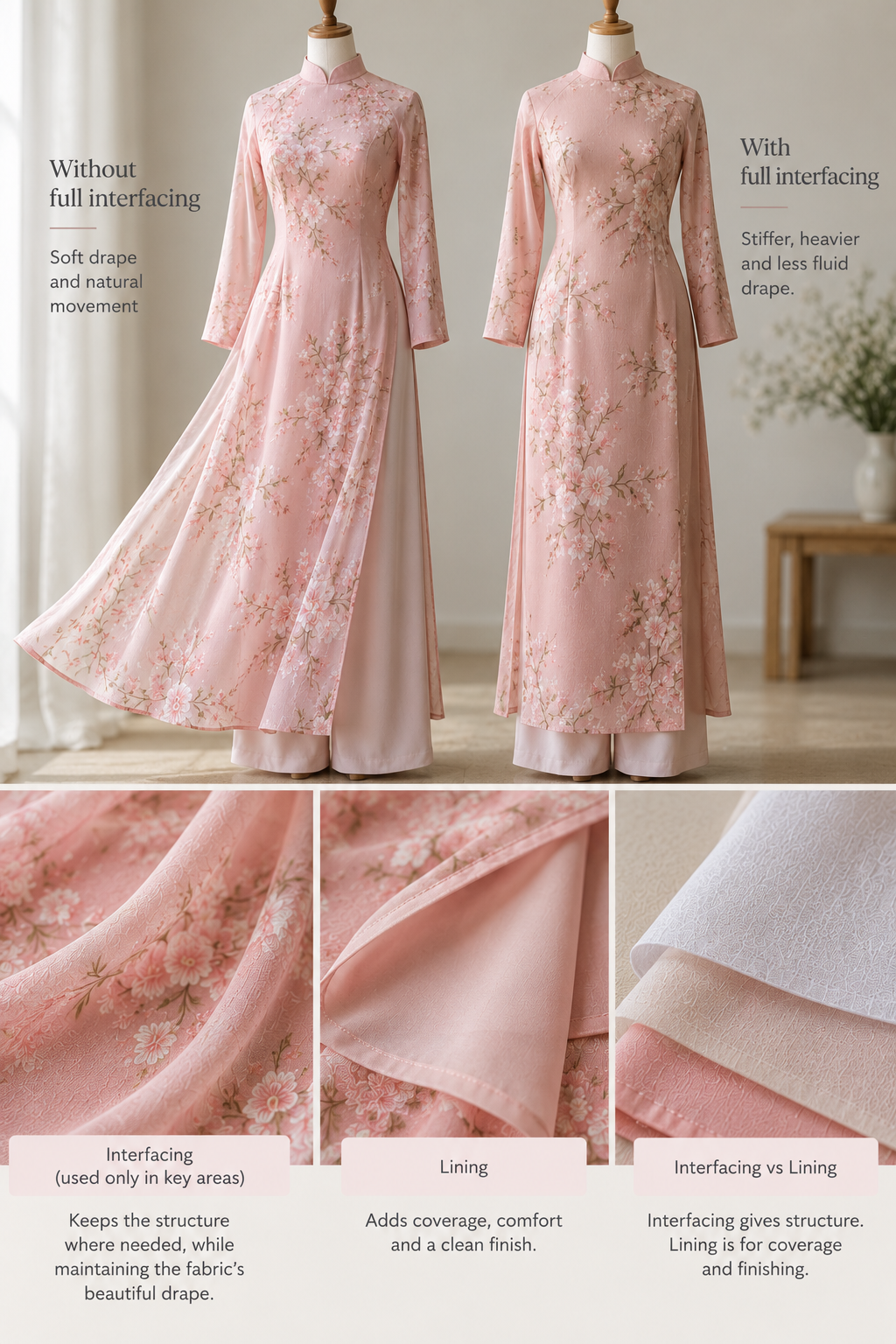
The good news? You don't need to interface your entire Áo Dài. In fact, less is often more, especially when working with lightweight fabrics.
Let's talk about where interfacing actually helps, what type to use, and when you can skip it altogether.
What Does Interfacing Actually Do?
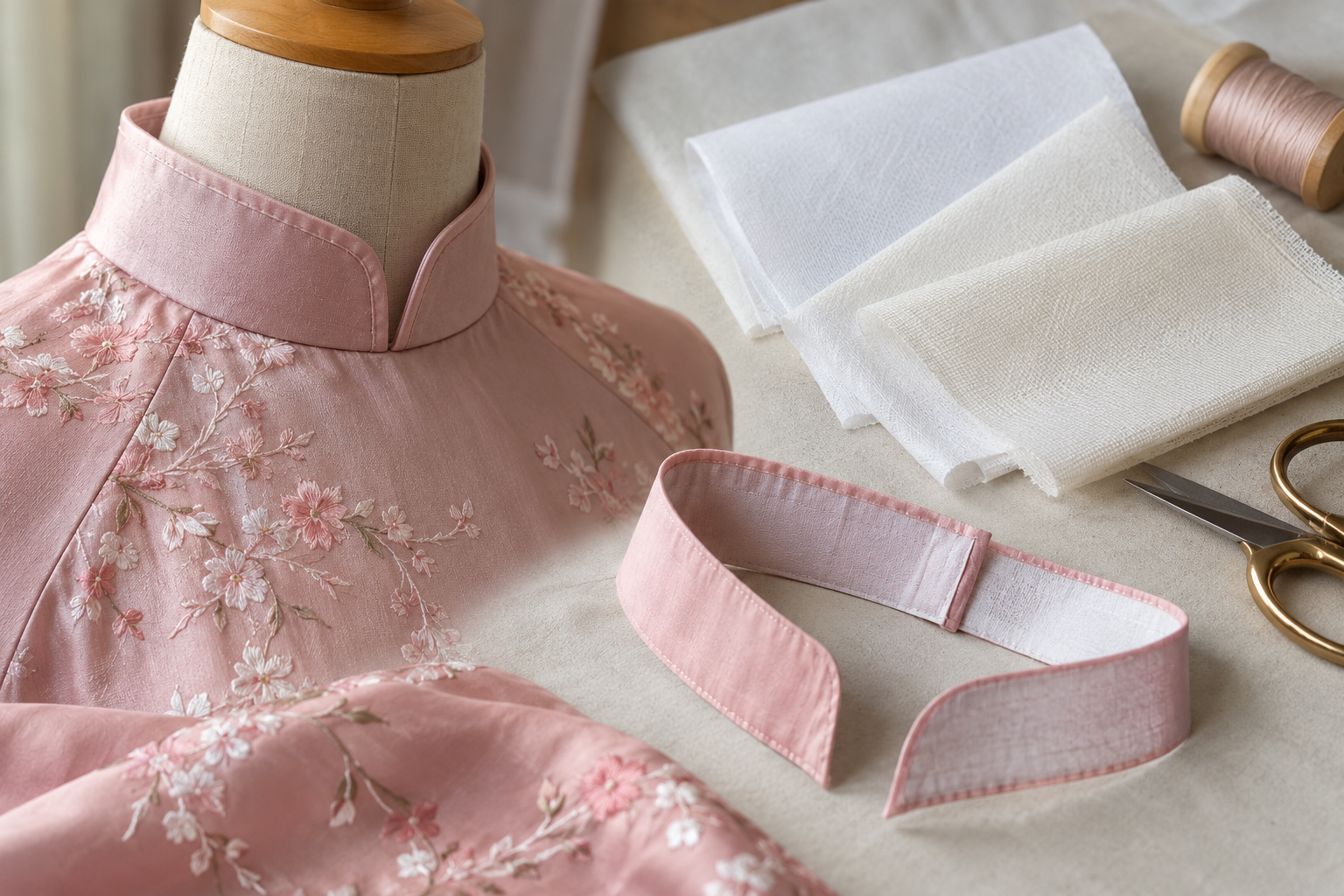
Interfacing is an additional layer of material used to give fabric extra support, stability, or structure.
For an Áo Dài, its main purpose isn't to make the garment stiff. It's to help certain areas hold their shape while allowing the rest of the garment to move naturally.
Traditional and modern Áo Dài often use lightweight, flowing fabrics such as silk, satin, chiffon, and various synthetic blends. These fabrics look beautiful on the body, but some can stretch, collapse, or lose their shape in areas that need a little more support.
That's where interfacing comes in.
The trick is choosing something that works with your fabric rather than against it.
1. The Collar: Where Interfacing Matters Most
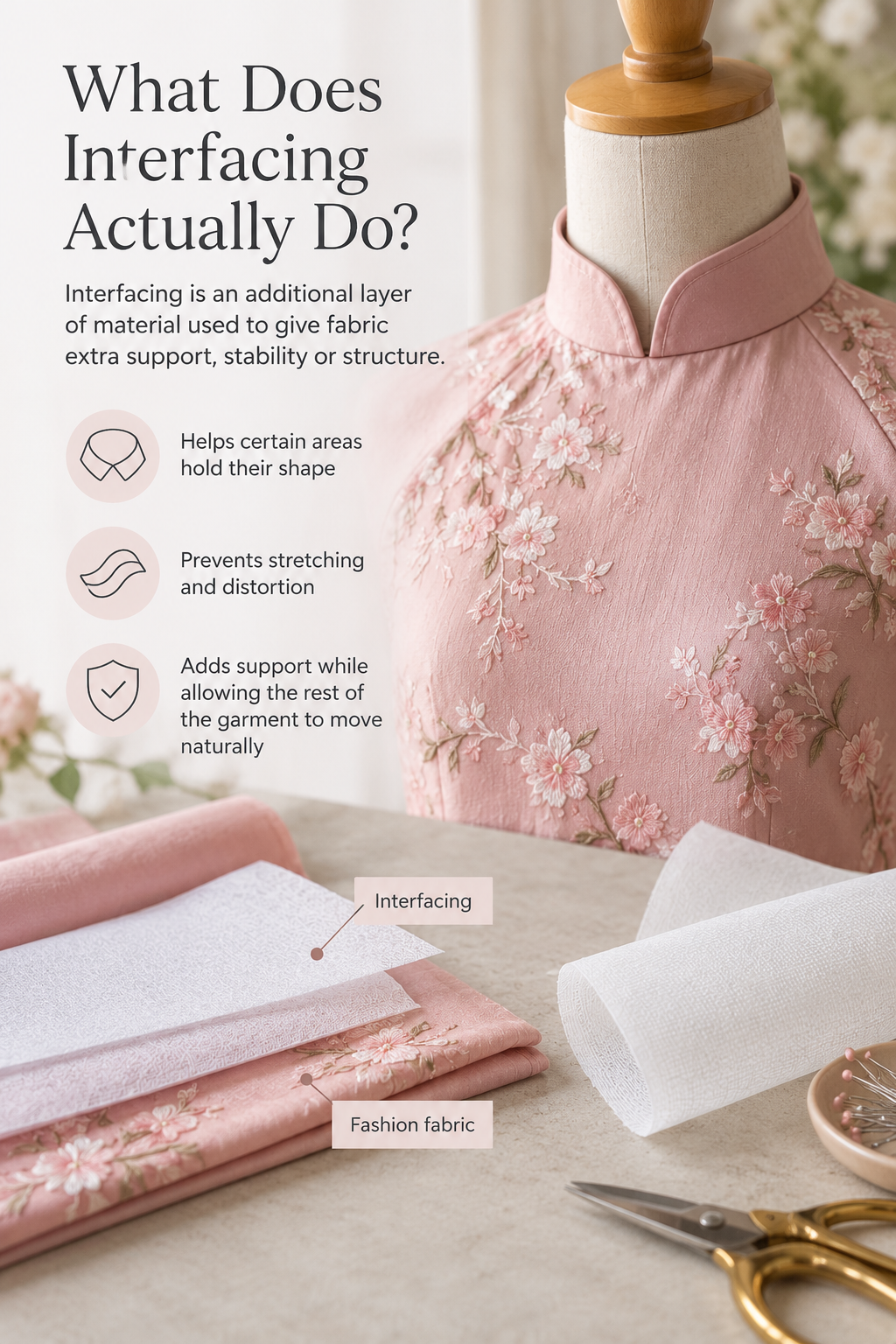
If there's one part of an Áo Dài where I would seriously consider interfacing, it's the collar.
The traditional standing collar is one of the most recognisable features of an Áo Dài. It needs enough structure to stand neatly around the neck without becoming stiff or uncomfortable.
For most lightweight to medium-weight fabrics, lightweight woven fusible interfacing is a good starting point.
Woven interfacing tends to move more naturally with woven fashion fabrics than a stiff, papery non-woven interfacing. It provides support while still allowing the collar to curve comfortably around the neck.
However, the right choice depends on your fabric.
Silk satin or lightweight silk: Try a very lightweight woven interfacing, or a suitable sew-in interfacing if the fabric is sensitive to heat.
Polyester satin or crepe: Lightweight fusible woven interfacing can work well, provided it bonds properly at a safe temperature.
Brocade or heavier jacquard: You might need very little interfacing, or none at all, if the fabric already has enough body.
Very sheer fabrics: Consider a matching fabric underlayer or a carefully chosen sew-in interfacing to avoid visible adhesive or an obvious change in opacity.
One mistake I would avoid is choosing a heavy interfacing simply because you want the collar to stand upright.
A collar that is too stiff can look unnatural, create sharp creases, and feel uncomfortable around the neck.
My tip: Make a small sample collar using your actual fabric and interfacing. Even a short curved section can tell you a lot about how the finished collar will behave.
2. The Button Placket: A Little Stability Goes a Long Way
Depending on your Áo Dài design, the opening might run along the shoulder, down the side, or through a combination of both.
If you're using buttons, loops, or other fastenings, these areas can benefit from some additional stability.
This is particularly important when working with lightweight satin or silk, where repeated opening and closing can put stress on the fabric.
A narrow strip of lightweight interfacing along the fastening area can help prevent stretching and distortion.
You don't necessarily need to interface the entire opening. Focus on the sections where the buttons, snaps, or other fastenings are attached.
For delicate fabrics, a narrow strip of silk organza or another suitable lightweight woven fabric can also work as a sew-in reinforcement.
The goal is to strengthen the area without creating a stiff strip that becomes visible from the outside.

3. What About the Neckline?
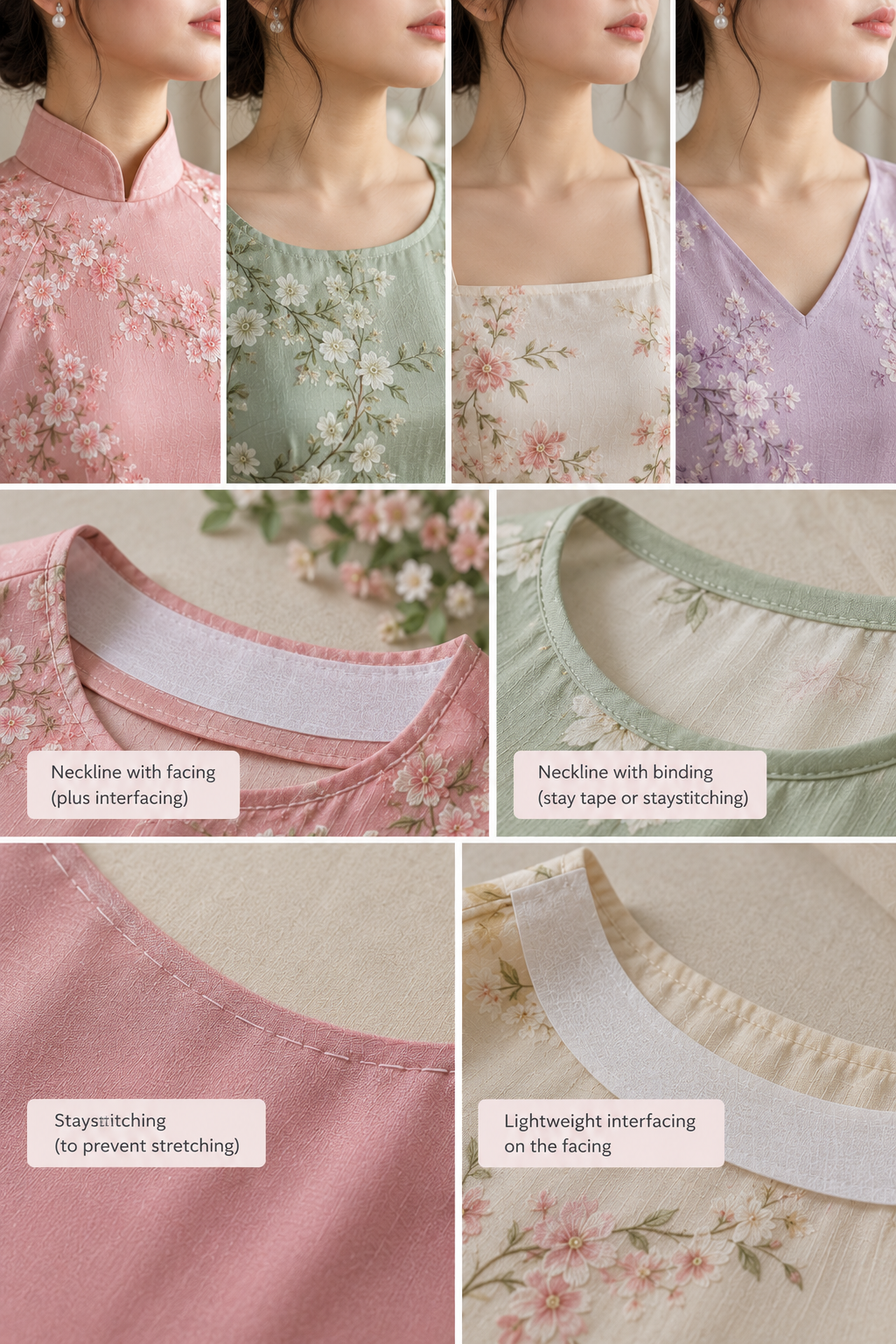
Not every Áo Dài has a standing collar. Modern designs often feature round, boat, square, or V-shaped necklines.
These necklines may need some stability, but that doesn't always mean using interfacing.
If your neckline has a facing, lightweight interfacing on the facing can help it lie neatly against the body.
For a neckline finished with binding, however, a narrow strip of stay tape or stay stitching might be all you need.
Bias-cut or curved necklines are particularly prone to stretching during handling and sewing.
Sometimes, the best solution is simply to staystitch the neckline as soon as the fabric is cut, before it has a chance to stretch.
Remember, interfacing and staystitching do different jobs. Interfacing adds support, while staystitching helps preserve the original shape of a cut edge.
4. Should You Interface the Entire Áo Dài?
Generally speaking, no.
One of the things that makes an Áo Dài beautiful is the way the fabric follows the body and falls naturally into the long front and back panels.
Adding interfacing across large areas can change the drape, making the garment feel heavier or more rigid than intended.
This is especially noticeable with silk and other lightweight fabrics.
If your fabric feels too thin or transparent, interfacing isn't necessarily the answer.
You may be better off using a suitable lining, underlining, or choosing a fabric with a little more substance.
Interfacing is for structure. Lining is primarily for coverage, comfort, or finishing. They serve different purposes, even though they can sometimes influence how a garment hangs.
5. Fusible or Sew-In Interfacing?
This is probably one of the most common questions when sewing with delicate fabrics.
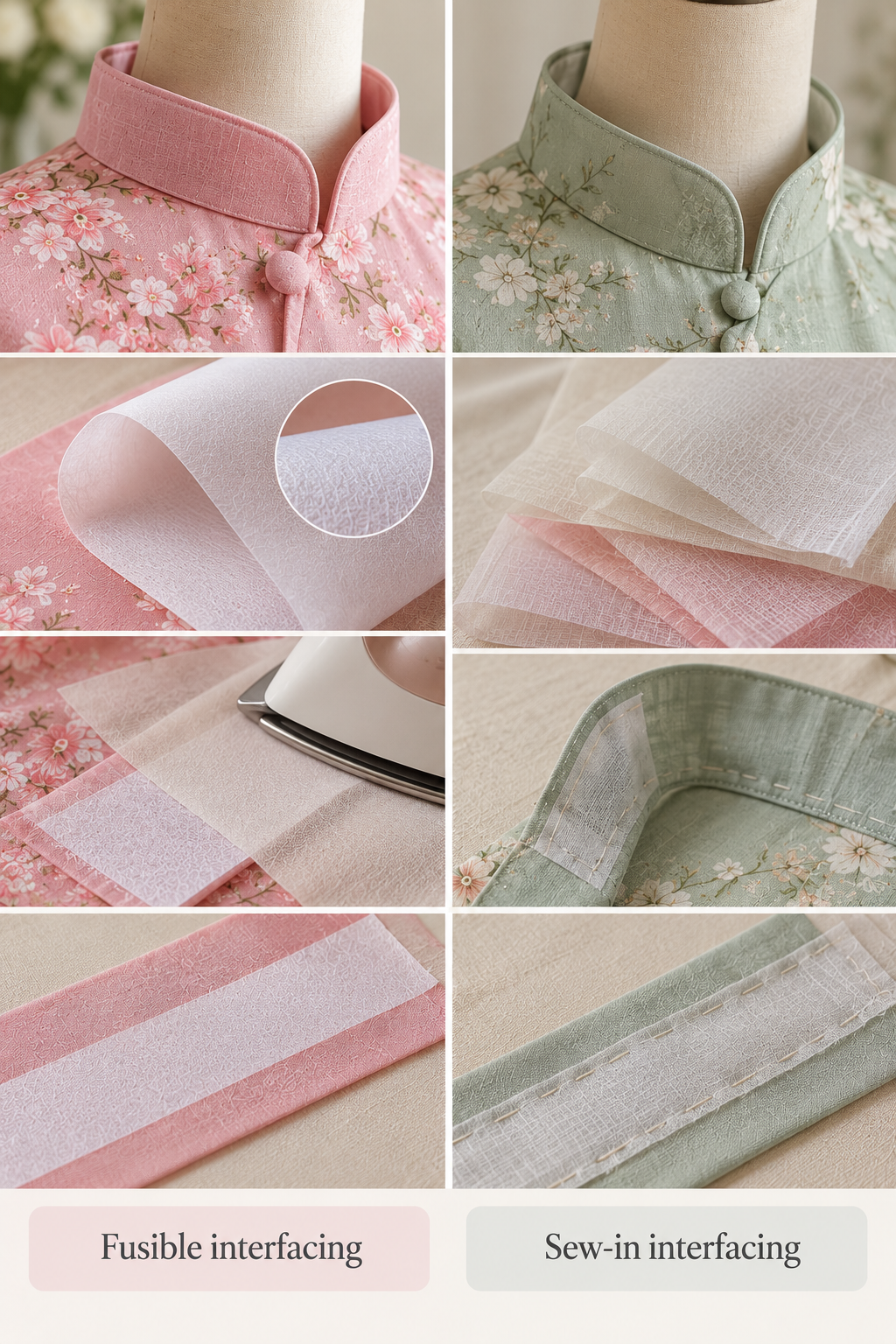
fusible interfacingFusible interfacing has an adhesive coating that bonds to your fabric when heat and pressure are applied.
It's convenient, easy to use, and works well for many everyday Áo Dài fabrics.
However, not all fabrics respond well to heat or adhesive.
Some satin fabrics can develop shiny marks, bubbling, or a slightly different surface texture after fusing. Delicate silk may also show the adhesive through the fabric.
Always test a small piece first.
Use the temperature, pressing time, and pressure recommended for the interfacing, while respecting the heat tolerance of your fashion fabric. A pressing cloth can help protect the surface, but it won't make an unsuitable fusible safe to use.
Sew-in interfacingSew-in interfacing doesn't require heat or adhesive. Instead, it's secured through stitching, usually within the seam allowances or as part of the garment construction.
It's often a better choice for delicate, textured, sheer, or heat-sensitive fabrics.
Silk organza is a particularly useful option because it's lightweight, strong, and provides gentle structure without adding much bulk.
That said, sew-in interfacing requires a little more care during construction to keep the layers smooth.
Neither method is automatically better. It really comes down to the fabric you're using and the finish you're trying to achieve.
6. Always Test Before You Commit
I know. Testing interfacing isn't exactly the most exciting part of sewing an Áo Dài.
But it's worth spending an extra ten minutes on a fabric scrap rather than discovering a problem after you've cut and assembled your garment.
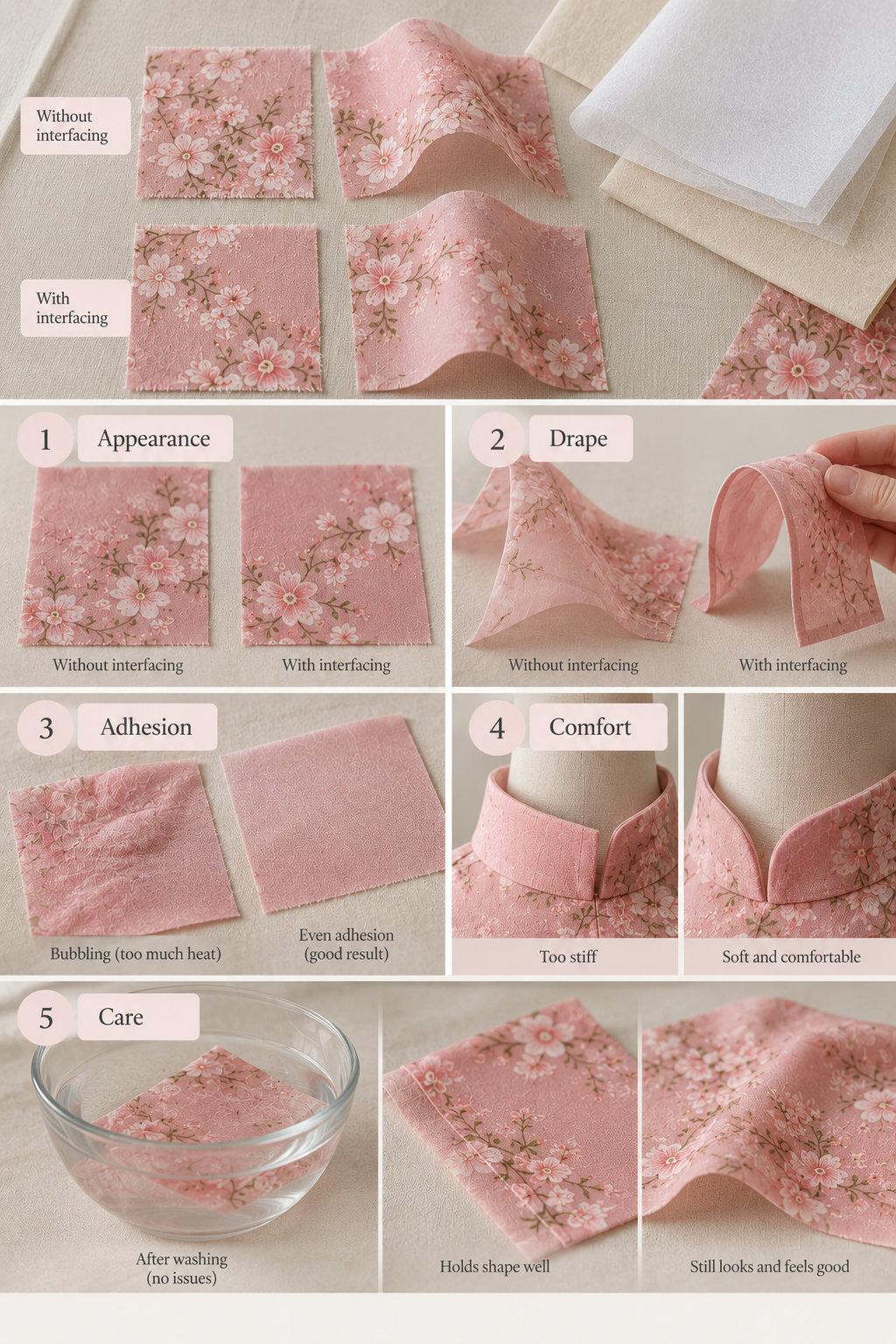
Here's what I usually recommend checking:
Appearance: Does the interfacing change the colour, sheen, or texture of the fabric?
Drape: Does the fabric still bend and move naturally?
Adhesion: If using fusible interfacing, has it bonded evenly without bubbling or peeling?
Comfort: Is the finished sample too stiff or scratchy, particularly around the neck?
Care: Does the interfaced sample behave well after washing or cleaning according to your intended garment care method?
For fusible interfacing, let the sample cool completely before moving or evaluating it.
If the fabric suddenly feels like cardboard, that's usually a sign to try something lighter.
7. One More Thing: Interfacing Won't Fix Everything
It's tempting to think that adding more interfacing will solve a collar that collapses or a neckline that doesn't sit correctly.
But interfacing can only do so much.
A collar that doesn't sit neatly might be caused by an incorrect neckline shape, collar height, or fitting issue. Similarly, a puckered button opening could be the result of fabric tension or construction rather than insufficient interfacing.
Before reaching for a heavier interfacing, check the pattern, fit, and sewing technique.
Sometimes, the fabric doesn't need more support. It needs a better fit.
Final Thoughts
When it comes to interfacing an Áo Dài, my approach is simple: use just enough to support the design, but not so much that you lose the beauty of the fabric.
For a traditional standing-collar Áo Dài, I would start by considering lightweight interfacing for the collar and fastening areas. For modern collarless designs, you might need even less.
And if you're working with a fabric that already holds its shape beautifully, don't feel that you must add interfacing simply because a sewing tutorial tells you to.
The best Áo Dài is one that feels comfortable, fits beautifully, and moves naturally with the person wearing it.
Sometimes, knowing where not to use interfacing is just as important as knowing where to use it.
Happy sewing!