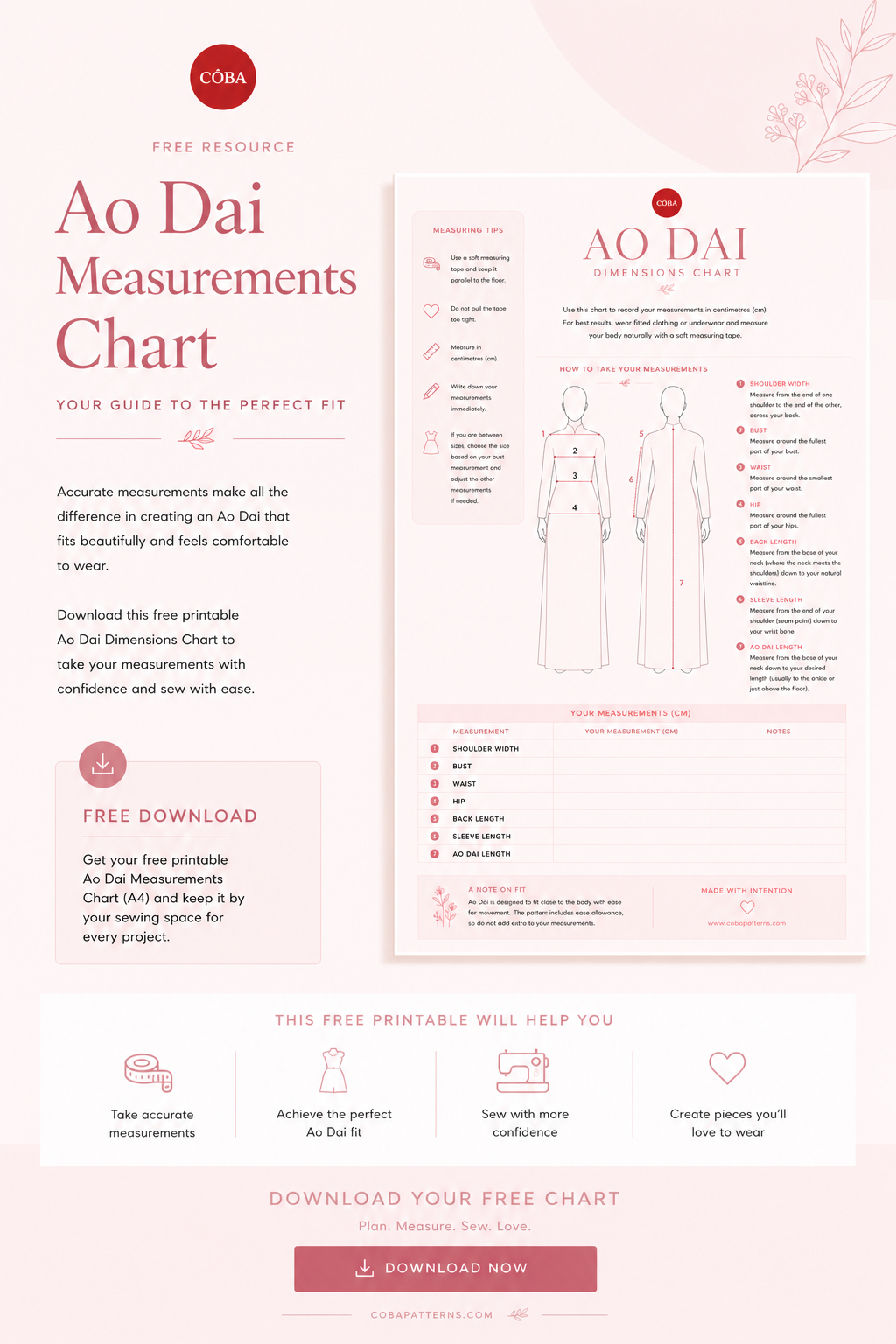
Ao Dai Measurements Explained + Free Chart
How to Measure Yourself Properly for a Modern Ao Dai
There’s something beautifully personal about sewing an Ao Dai. Unlike many modern garments, an Ao Dai is designed to follow the natural lines of the body — softly fitted through the waist, elegant through the shoulders, and fluid through the panels.
Because of this, accurate measurements are everything.
Whether you’re sewing your very first Ao Dai or refining your fit, this guide will walk you through the essential measurements needed for a modern Vietnamese Ao Dai silhouette.
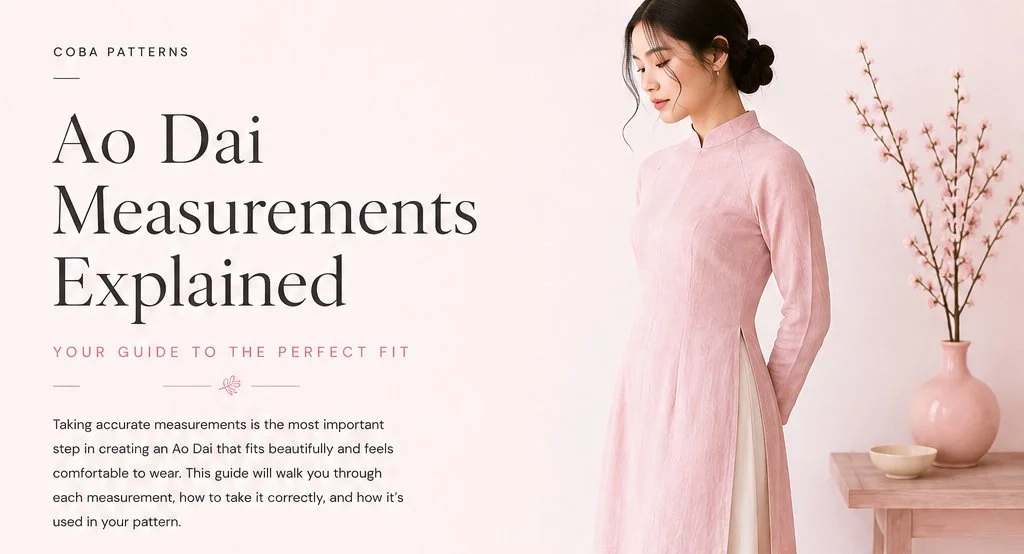
Why Ao Dai Measurements Matter
The Ao Dai is designed to feel graceful rather than restrictive. A well-fitted Ao Dai should:
skim the body softly
allow comfortable movement
sit smoothly across the chest and shoulders
create elegant side draping
maintain clean vertical lines
Unlike oversized garments, even small measurement inaccuracies can affect the final silhouette.
The good news is that once you understand the key measurement points, fitting becomes much easier.
Before You Start Measuring
For the most accurate results:
Wear fitted clothing or undergarments
Stand naturally without sucking in
Use a soft measuring tape
Ask someone to help if possible
Keep the tape snug but not tight
It’s also helpful to write your measurements down immediately.
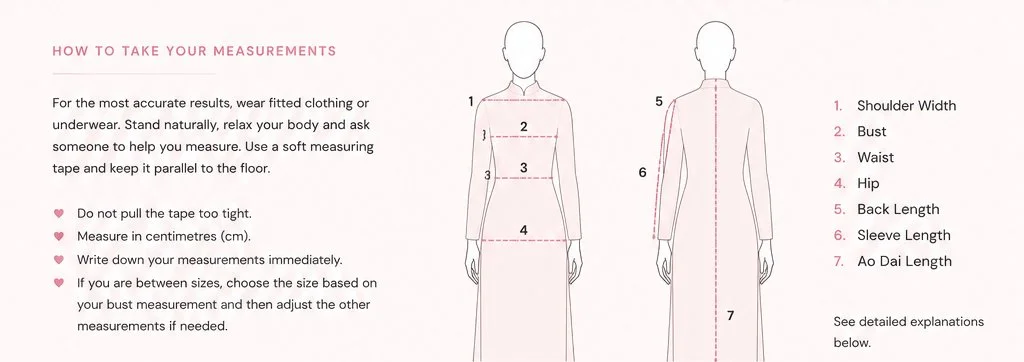
Essential Ao Dai Measurements
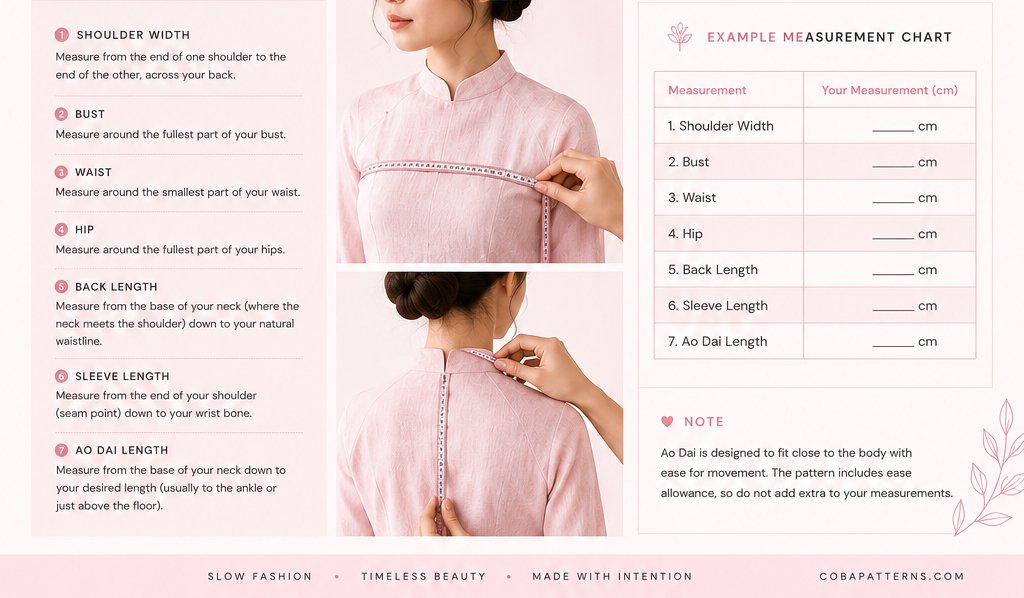
1. Bust
Measure around the fullest part of your bust while keeping the tape parallel to the floor.
This measurement determines:
chest ease
front fit
overall garment balance
Tip: For a softer modern fit, allow a small amount of ease rather than making the garment skin-tight.
2. Waist
Measure the narrowest part of your natural waist.
The waist is one of the most important shaping points in an Ao Dai because it creates the elegant long-line silhouette.
Avoid pulling the tape too tightly.
3. Hip
Measure around the fullest part of your hips.
This helps determine:
side slit placement
skirt flow
walking comfort
If the hip measurement is too tight, the panels may pull open awkwardly.
4. Shoulder Width
Measure from shoulder point to shoulder point across your back.
A balanced shoulder fit is essential for:
sleeve positioning
collar alignment
overall structure
This is often one of the most overlooked measurements in beginner sewing.
5. Sleeve Length
Measure from the shoulder point down to your desired sleeve length.
Traditional Ao Dai sleeves are usually long and slim, but modern styles can vary.
You can also customise:
bracelet length sleeves
short sleeves
relaxed linen sleeves
flared sleeves
6. Arm Circumference
Measure around the fullest part of your upper arm.
Ao Dai sleeves are often narrow, so this measurement is important for comfort and movement.
Add slight ease if using non-stretch fabrics like linen or silk.
7. Neck Circumference
Measure around the base of your neck.
This measurement is especially important if you’re sewing:
traditional high collars
mandarin collars
structured necklines
The collar should feel elegant and secure — never restrictive.
8. Ao Dai Length
Measure from the highest shoulder point down to your desired hem.
Traditional Ao Dai lengths often fall below the knee or to the ankle.
Modern minimalist styles may be:
shorter
softer
layered over wide-leg trousers
Common Measurement Mistakes
Measuring Too Tightly
This is the most common beginner mistake.
An Ao Dai should feel refined and fluid — not compressed.
Ignoring Shoulder Measurements
Poor shoulder measurements can affect the entire garment.
Even if the bust fits correctly, the dress can still feel off-balance if the shoulders are inaccurate.
Forgetting About Fabric Type
Different fabrics behave differently.
For example:
linen needs more ease
silk drapes more closely
cotton holds more structure
Always consider your fabric before finalising measurements.
Recommended Fabrics for Beginners
If you’re sewing your first Ao Dai, softer fabrics are usually easier to manage.
Good beginner-friendly options include:
linen blends
lightweight cotton
rayon blends
soft crepe
More advanced fabrics include:
silk charmeuse
satin
organza layering
Final Thoughts
Learning how to measure properly is one of the most important steps in sewing an Ao Dai beautifully.
The process may feel detailed at first, but over time you’ll begin to understand how small adjustments create entirely different silhouettes.
An Ao Dai is more than a garment — it’s a balance of structure, softness, movement, and heritage.
Take your time with measurements, trust the process, and allow the garment to evolve naturally with your sewing journey.
Now that you have your measurements, you're ready to start sewing. Download our free áo dài sewing pattern and use your measurements to choose the best size and make any fit adjustments before cutting your fabric.