Choosing the Right Fabric for Your Áo Dài
A guide to finding the perfect drape, movement, and elegance.
The beauty of an áo dài lies not only in its silhouette but also in the fabric that brings it to life. The right fabric can transform the garment — from soft and romantic to structured and dramatic. When choosing fabric for your áo dài, it helps to understand how different textiles behave and how they complement the traditional form of the dress.
Here are some of the most popular fabrics used for áo dài and what makes each one special.
Silk – The Timeless Classic
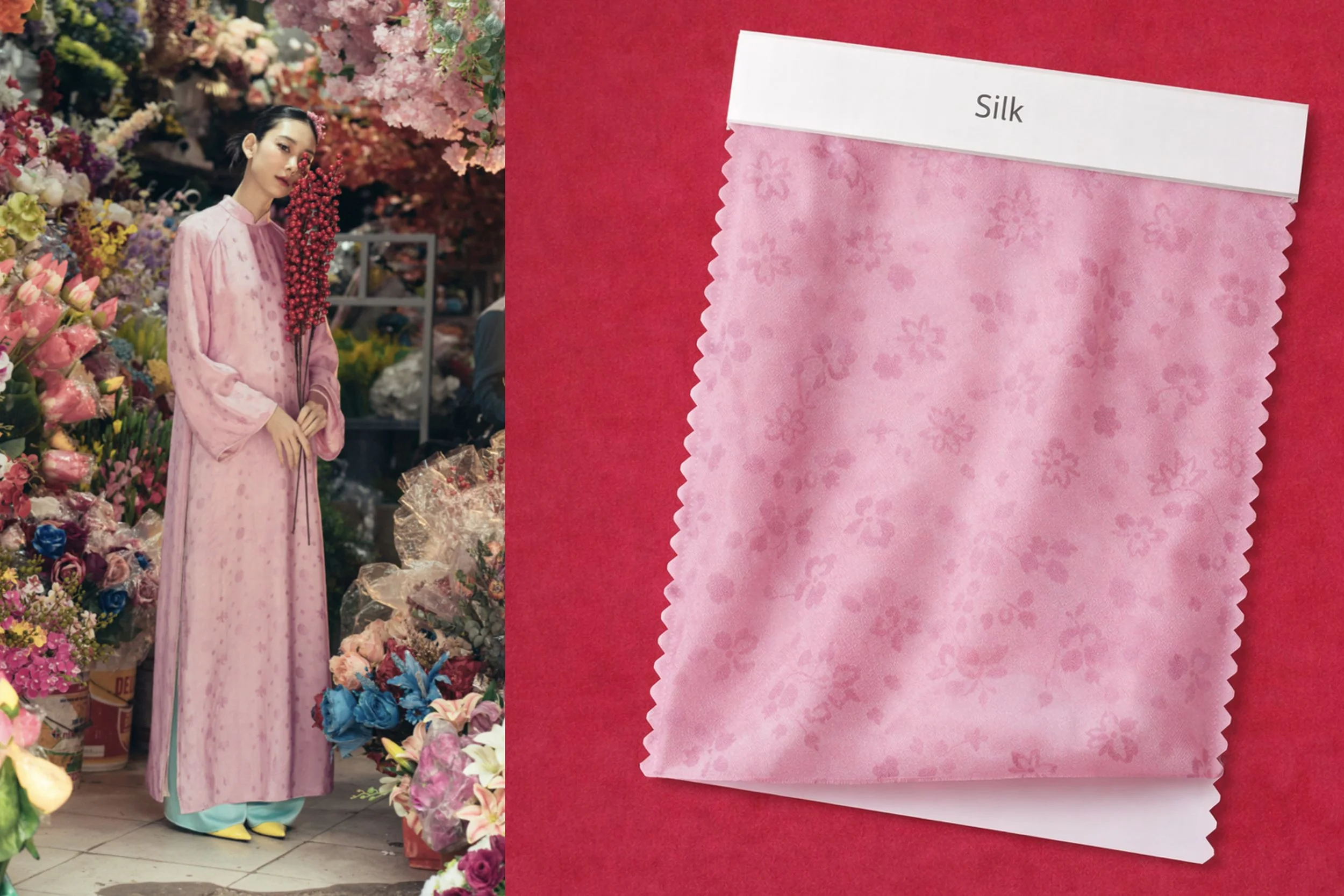
If there is one fabric most closely associated with the áo dài, it is silk.
Silk drapes beautifully over the body, creating the elegant flowing lines that make the áo dài so iconic. It feels lightweight, breathable, and luxurious against the skin. Because silk moves naturally with the wearer, it enhances the graceful silhouette of the dress.
Silk áo dài are commonly worn for weddings, formal celebrations, and traditional occasions.
Best for:
• Traditional áo dài
• Formal events
• Elegant, fluid silhouettes
Chiffon – Light and Romantic
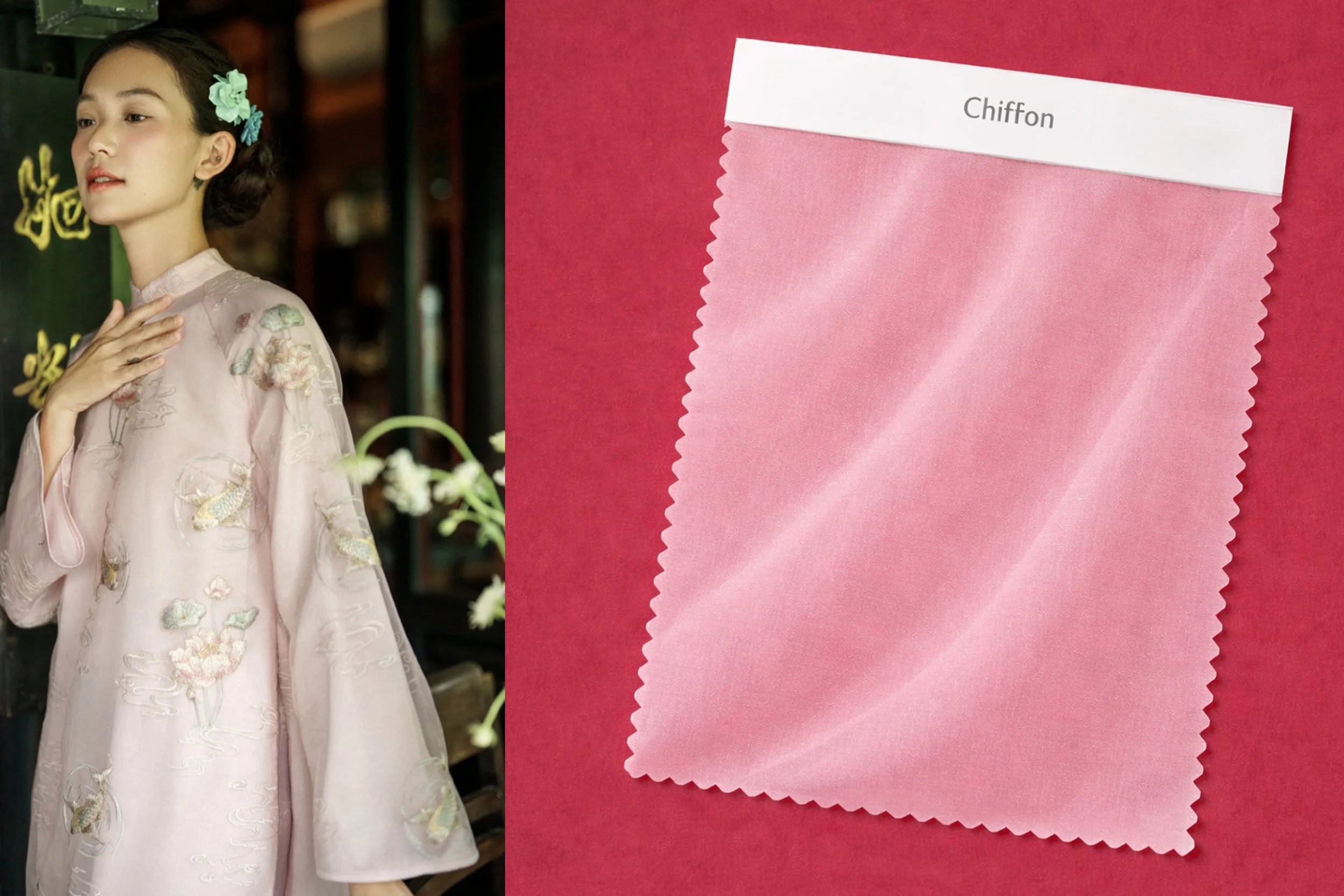
Chiffon is a sheer, airy fabric that creates a soft and dreamy look. It works beautifully for modern áo dài designs, especially when layered over lining fabrics.
Because chiffon is lightweight and slightly translucent, it adds movement and a delicate femininity to the garment.
However, chiffon can be slippery and slightly tricky to sew, so beginners may want to practice first.
Best for:
• Soft flowing designs
• Modern or feminine styles
• Layered áo dài
Satin – Smooth and Elegant
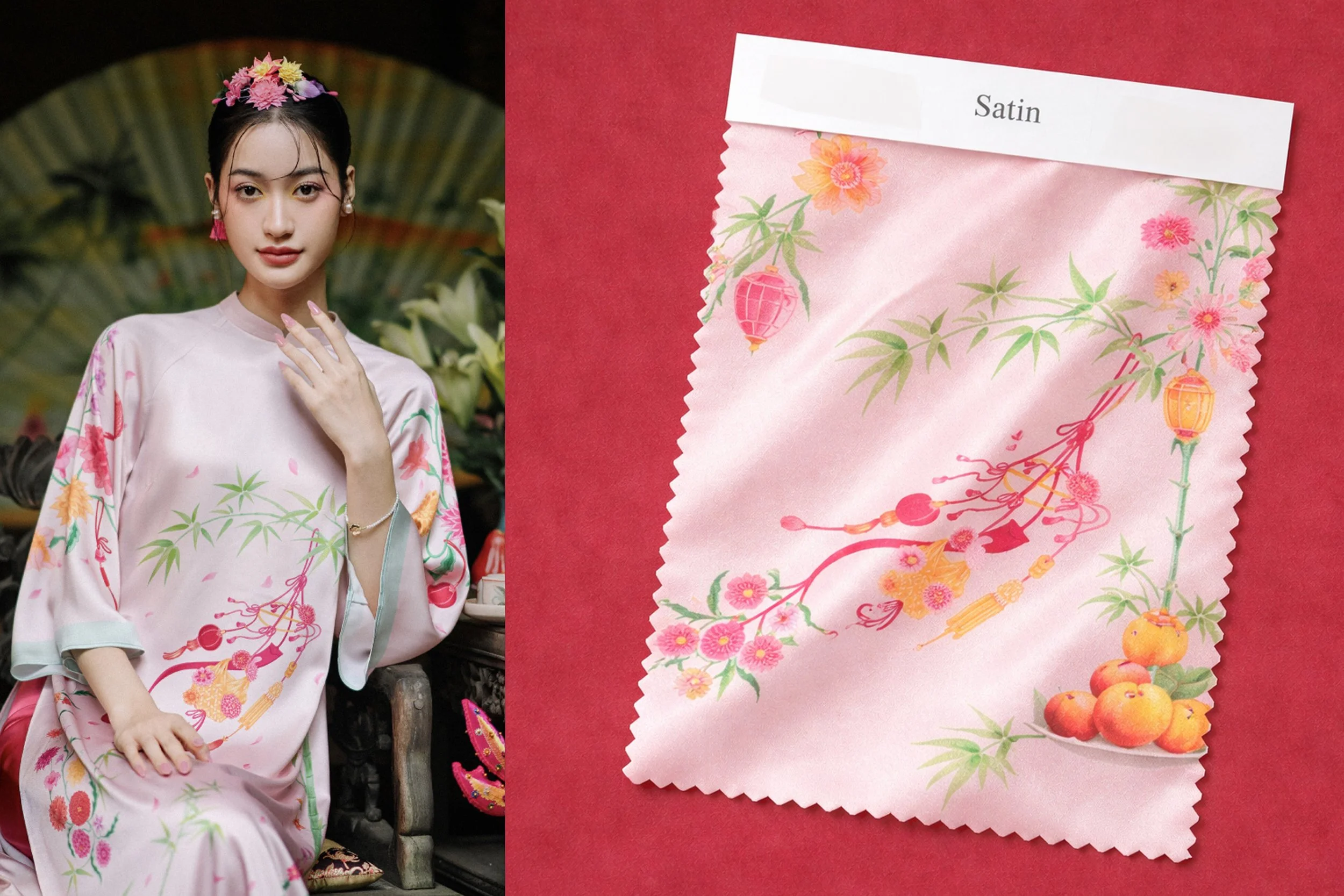
Satin offers a glossy surface with a fluid drape that catches the light beautifully. It creates a polished, glamorous look while still maintaining the elegant structure of the áo dài.
Compared to silk, satin is often more affordable and easier to find in a wide range of colours.
One thing to keep in mind is that satin can highlight seams and wrinkles, so careful sewing and pressing are important.
Best for:
• Evening áo dài
• Bold colours and modern styles
• A sleek, polished finish
Embroidered Organza – Textured and Elegant
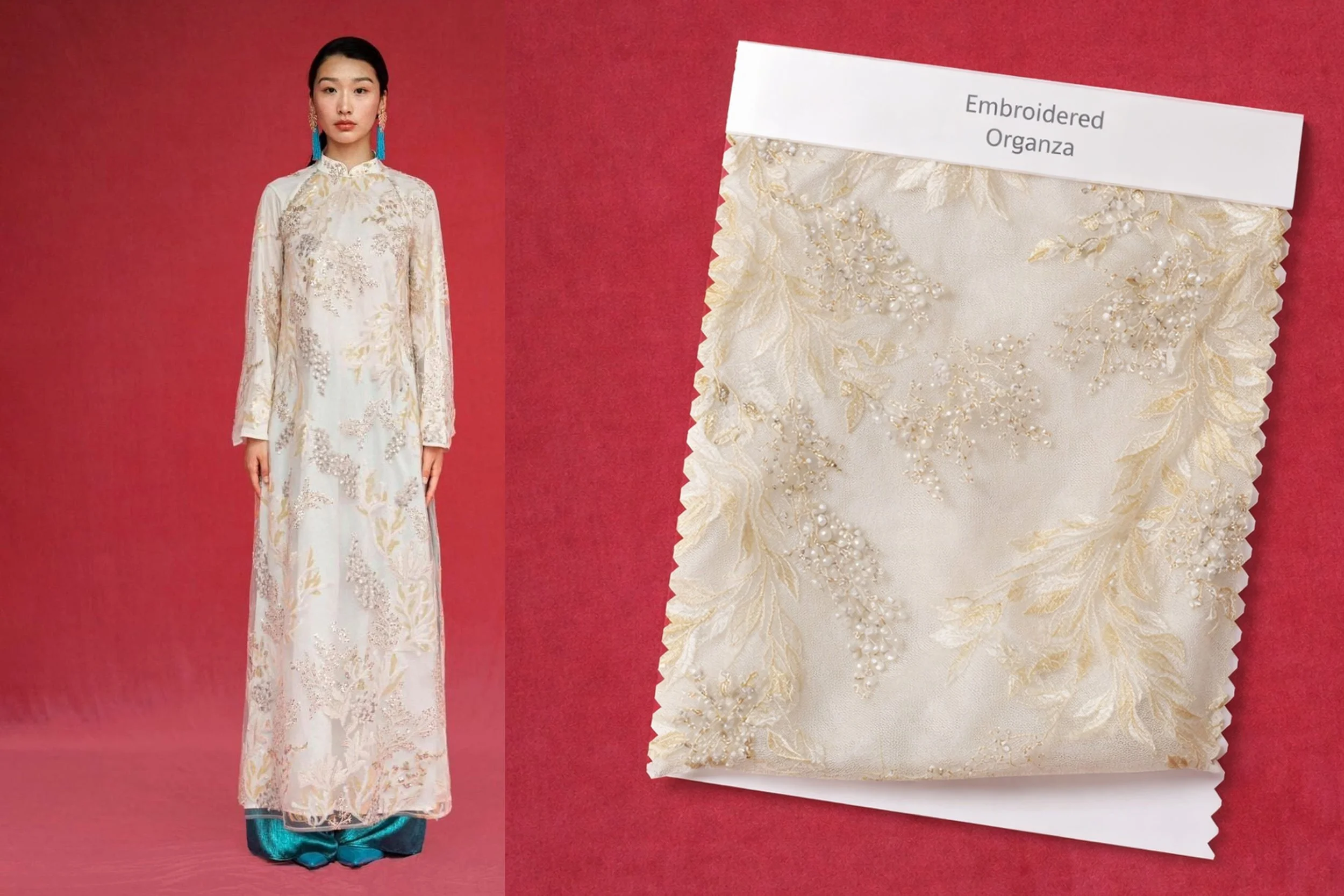
Embroidered organza combines the light, structured quality of organza with delicate embroidery that adds depth and visual interest. The sheer base allows floral motifs, beads, or metallic threads to appear as if they are floating across the fabric.
Because organza holds its shape well, embroidered versions create a beautiful balance between structure and delicacy, making the áo dài feel both refined and dramatic.
Designers often use embroidered organza to create statement pieces while still keeping the garment lightweight and graceful.
Best for:
• Bridal or special occasion áo dài
• Layered or sheer designs
• Textured, couture-style silhouettes
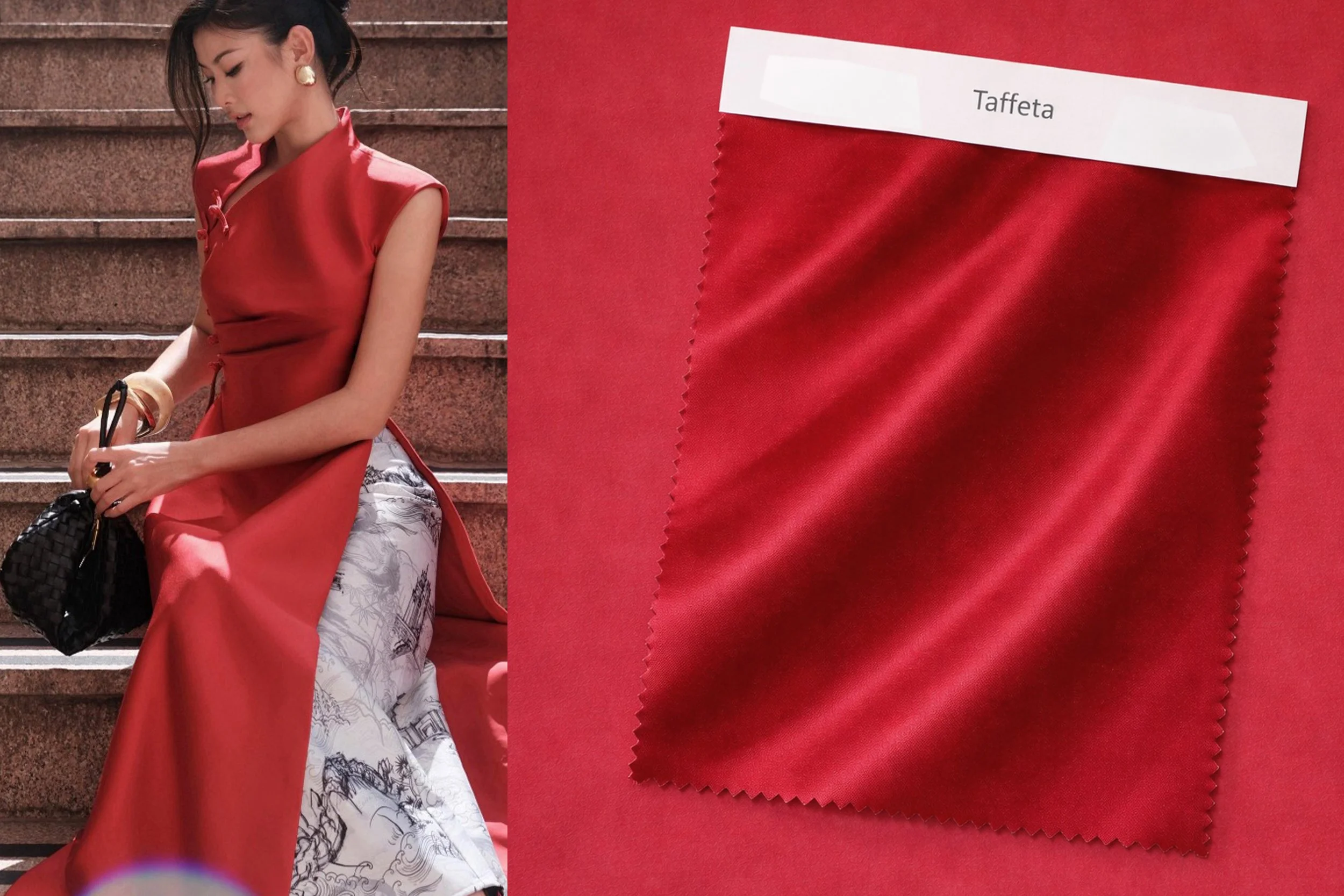
Taffeta – Crisp and Dramatic
Taffeta is a crisp fabric with a slight sheen and a structured feel. It holds shape beautifully and gives the áo dài a more sculptural look.
Because of its firmness, taffeta is often used for formal áo dài or designs that require volume and structure.
Best for:
• Formal or ceremonial áo dài
• Structured silhouettes
• Dramatic fashion pieces
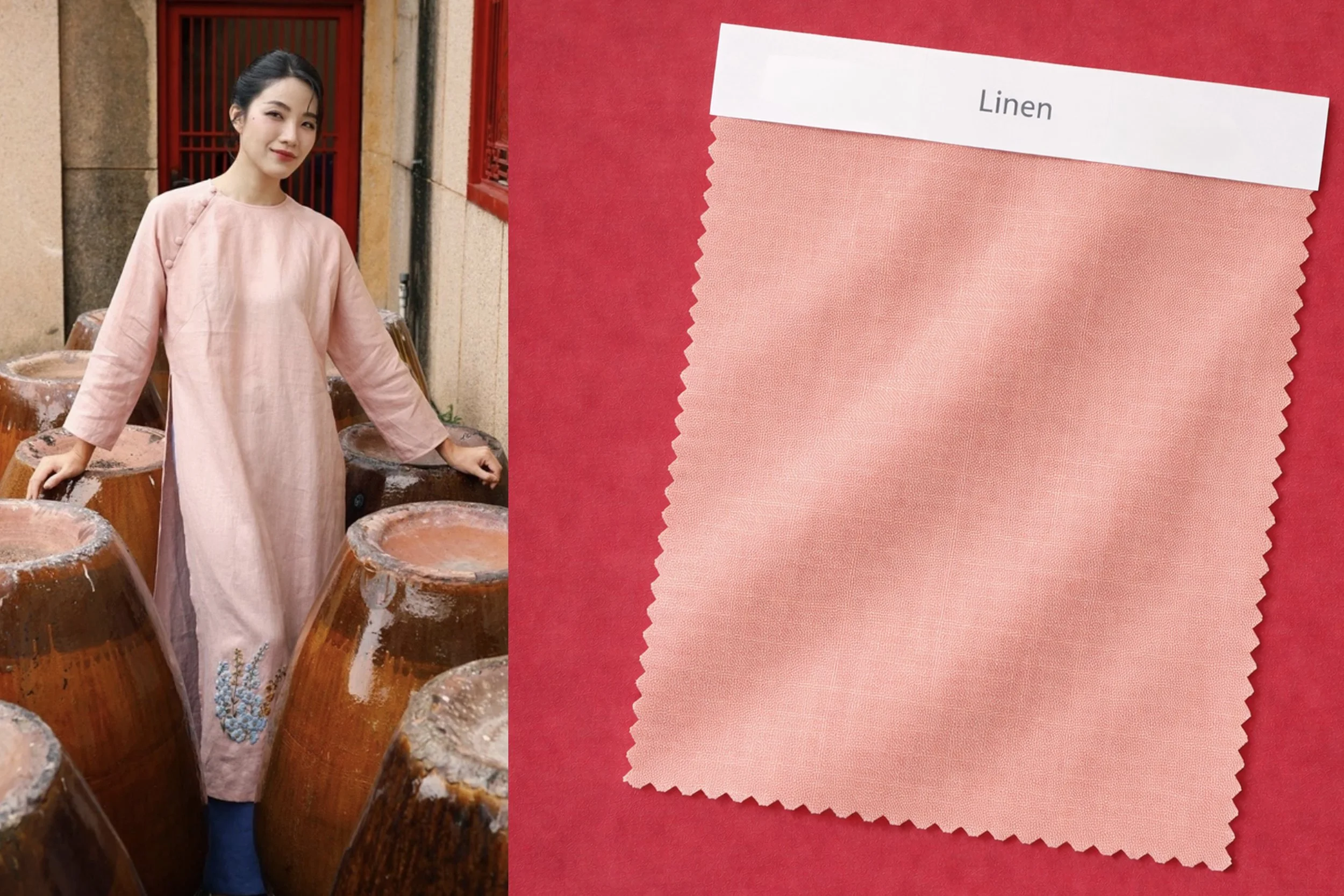
Cotton or Linen – Everyday Comfort
While traditional áo dài are often made from silk, cotton and linen are wonderful options for everyday wear.
These fabrics are breathable, comfortable, and easy to sew, making them ideal for beginners or casual áo dài styles.
They create a more relaxed, modern interpretation of the classic garment.
Best for:
• Casual or everyday áo dài
• Beginner sewing projects
• Summer wear
The key to a beautiful áo dài is drape. The fabric should skim the body rather than feel stiff or bulky. Before cutting into your fabric, it can be helpful to hold it against yourself and observe how it falls and moves.
A good áo dài fabric should feel graceful when you walk — because movement is part of what makes the dress so timeless.
At Cô Ba Patterns, we design our áo dài sewing patterns to work beautifully with a range of fabrics, from soft silks to modern organza layers. Each fabric tells a slightly different story — and part of the joy of sewing your own áo dài is choosing the one that reflects your style.
After all, every stitch becomes part of the story you wear.
Images via Pinterest
