The Story of the Áo Dài — And Why It Still Inspires Us
The áo dài did not simply appear as Vietnam’s national dress — it evolved, slowly and gracefully, shaped by politics, culture, and changing ideas of beauty.
Its roots can be traced back to the 18th century, when Lord Nguyen Phuc Khoat encouraged a distinct style of dress in southern Vietnam to differentiate his court from the north. The garment at the time was looser and layered, worn over trousers — practical, modest, and refined. Even in its earliest form, the balance between structure and movement was already present.
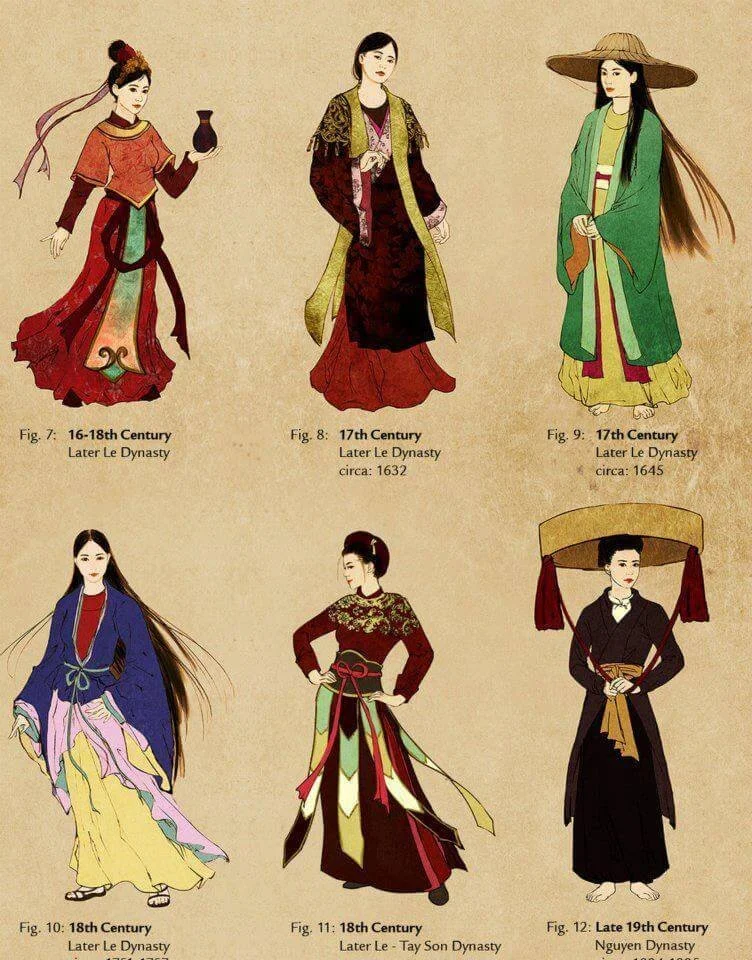
Various designs from the 16th to late 19th Century
In the early 20th century, as Vietnam experienced French colonial influence and cultural shifts, the áo dài began to transform. During the 1930s, Hanoi-based designer Nguyen Cat Tuong (known as Le Mur) reimagined the garment with softer tailoring, curved seams, and a more fitted silhouette inspired by Western dressmaking techniques. This marked a turning point — the áo dài became not only traditional, but modern.
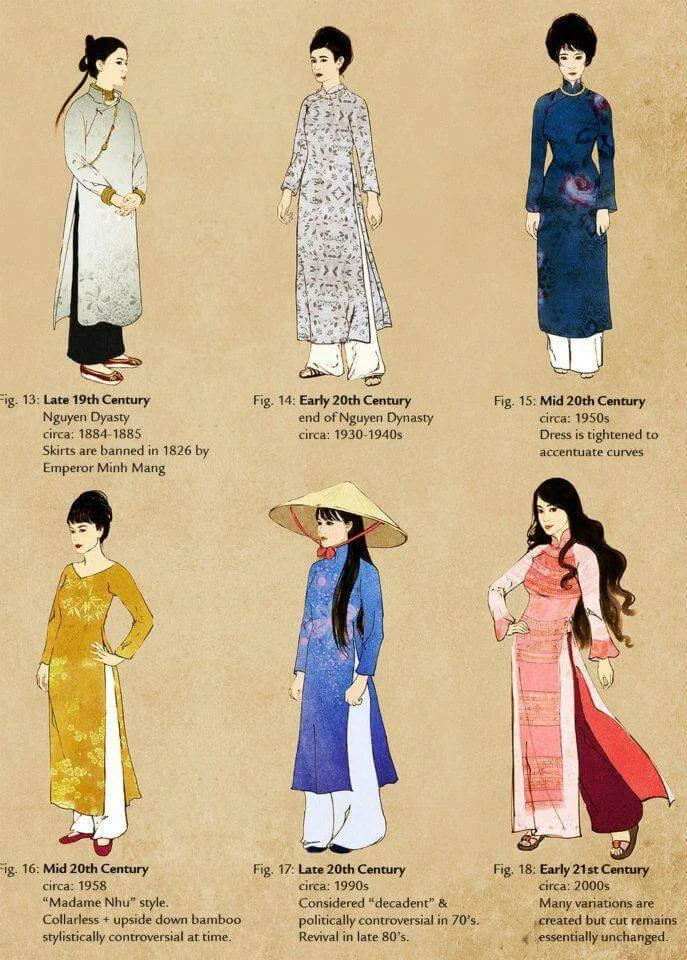
Various designs from the late 19th to early 21st Century
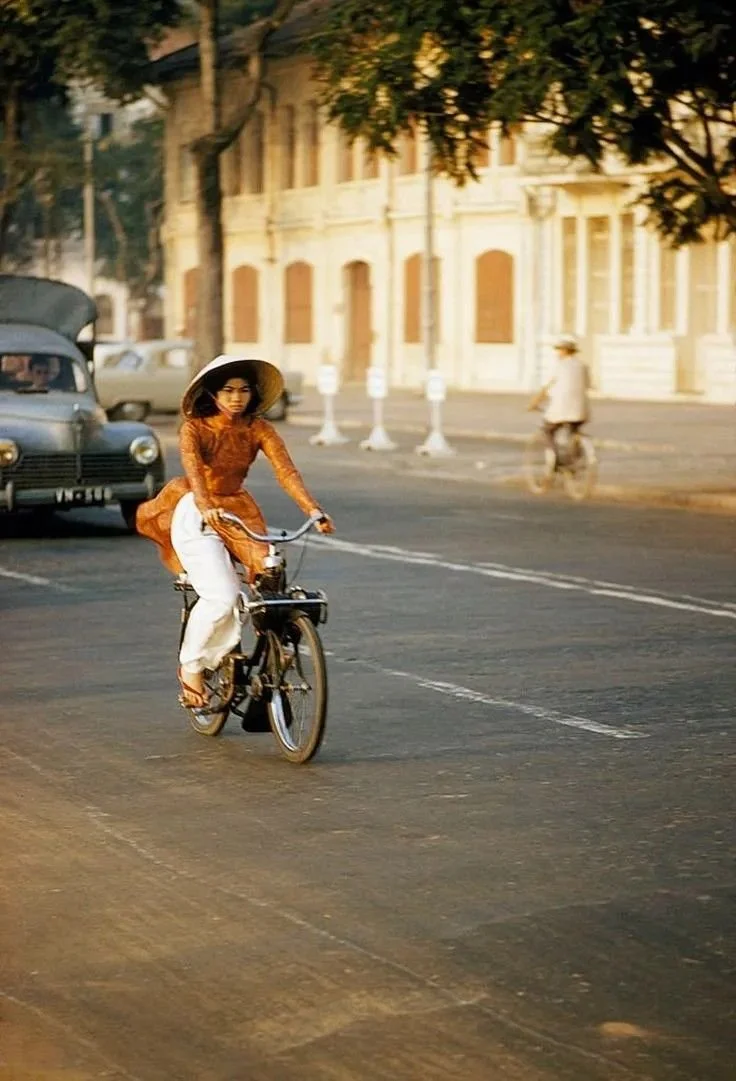
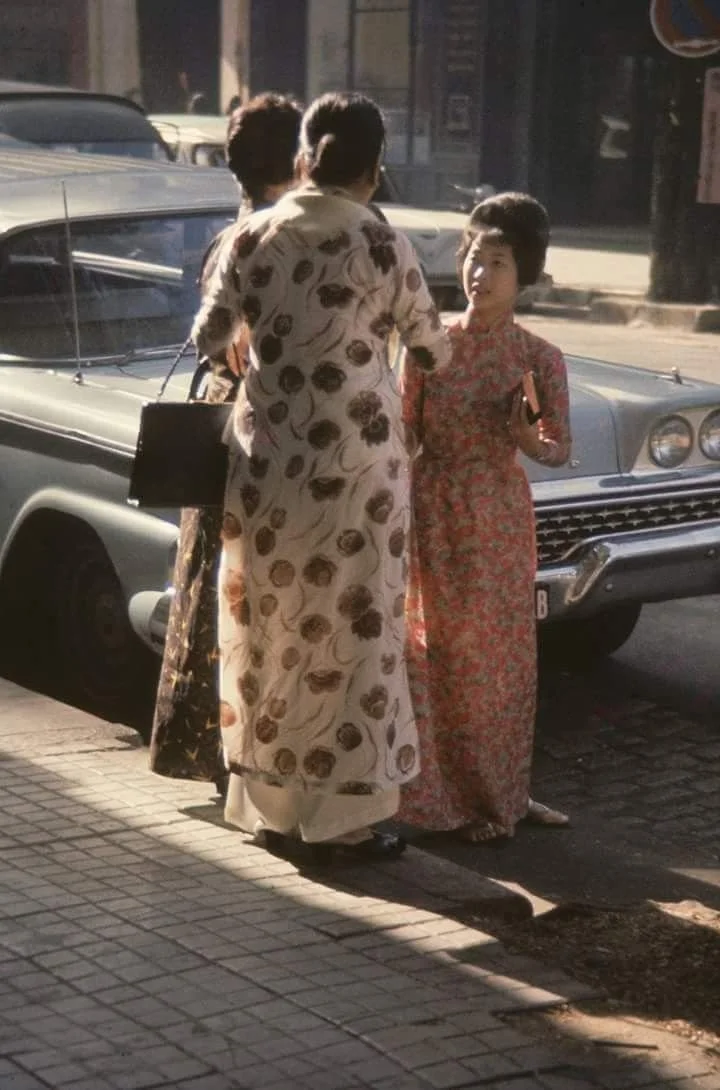
By the 1950s and 60s, particularly in Saigon — tailors refined the high collar, elongated panels, and dramatic side slits that define the silhouette today. It was worn daily by students, teachers, and professionals. It became a symbol of education, femininity, resilience, and quiet confidence. Photographs from that era show women cycling to school, walking under blossoming trees, áo dài flowing behind them — elegant yet grounded in everyday life.
Today, the áo dài is most often seen during Tết, weddings, graduations, and formal ceremonies. It represents heritage and pride. Yet it is not frozen in time. Contemporary designers reinterpret it with new fabrics and proportions. Younger generations style it in personal, expressive ways. The áo dài continues to evolve — just as it always has.
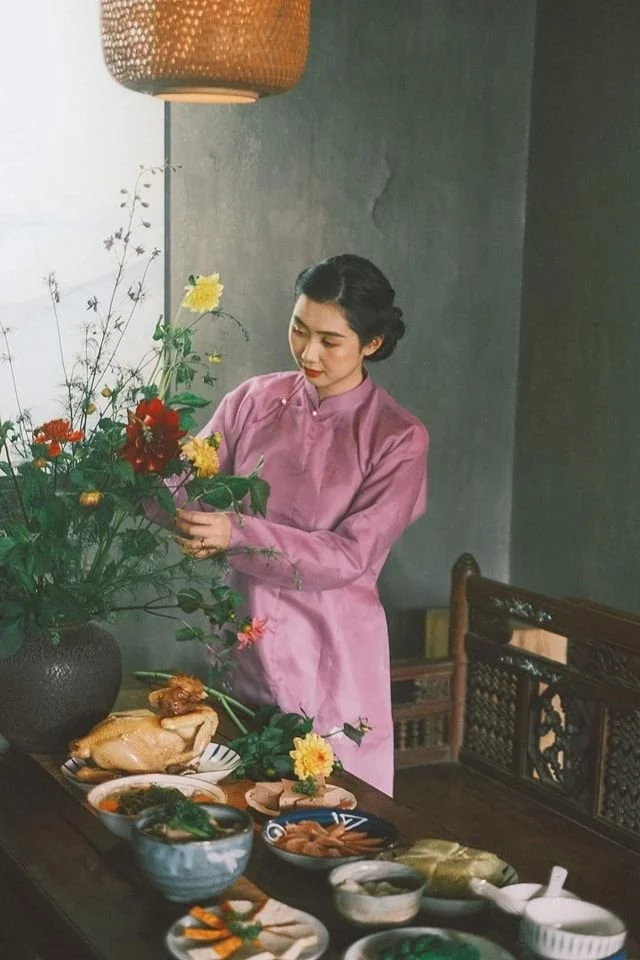
At CôBa Studio, this living history is at the heart of what we create. Our digital áo dài sewing patterns are designed to honour the garment’s traditional lines while making it accessible to modern makers. By sewing your own áo dài, you are not simply recreating a dress — you are participating in a lineage of craftsmanship and storytelling.
The áo dài is more than silk and seams.
It is identity stitched into form.
It is tradition moving forward.
And in every handmade version, the story continues.
