How to Sew an Ao Dai: A Complete Guide + Free Pattern
If you’ve been searching for a free áo dài sewing pattern or a step-by-step guide on how to sew a traditional Vietnamese áo dài at home, you’re in the right place.
In this tutorial, we’ll walk you through how to create a modern raglan-style áo dài with a back zipper and elegant 3/4 flared sleeves, designed for comfort, movement, and a flattering silhouette. This pattern is perfect whether you’re a beginner learning how to sew garments or an experienced sewist looking for a digital áo dài pattern to add to your collection.
The áo dài is a timeless and iconic Vietnamese dress, known for its fitted bodice, high collar, and flowing panels. With this printable PDF sewing pattern, you can recreate this beautiful garment at home using your own choice of fabric.
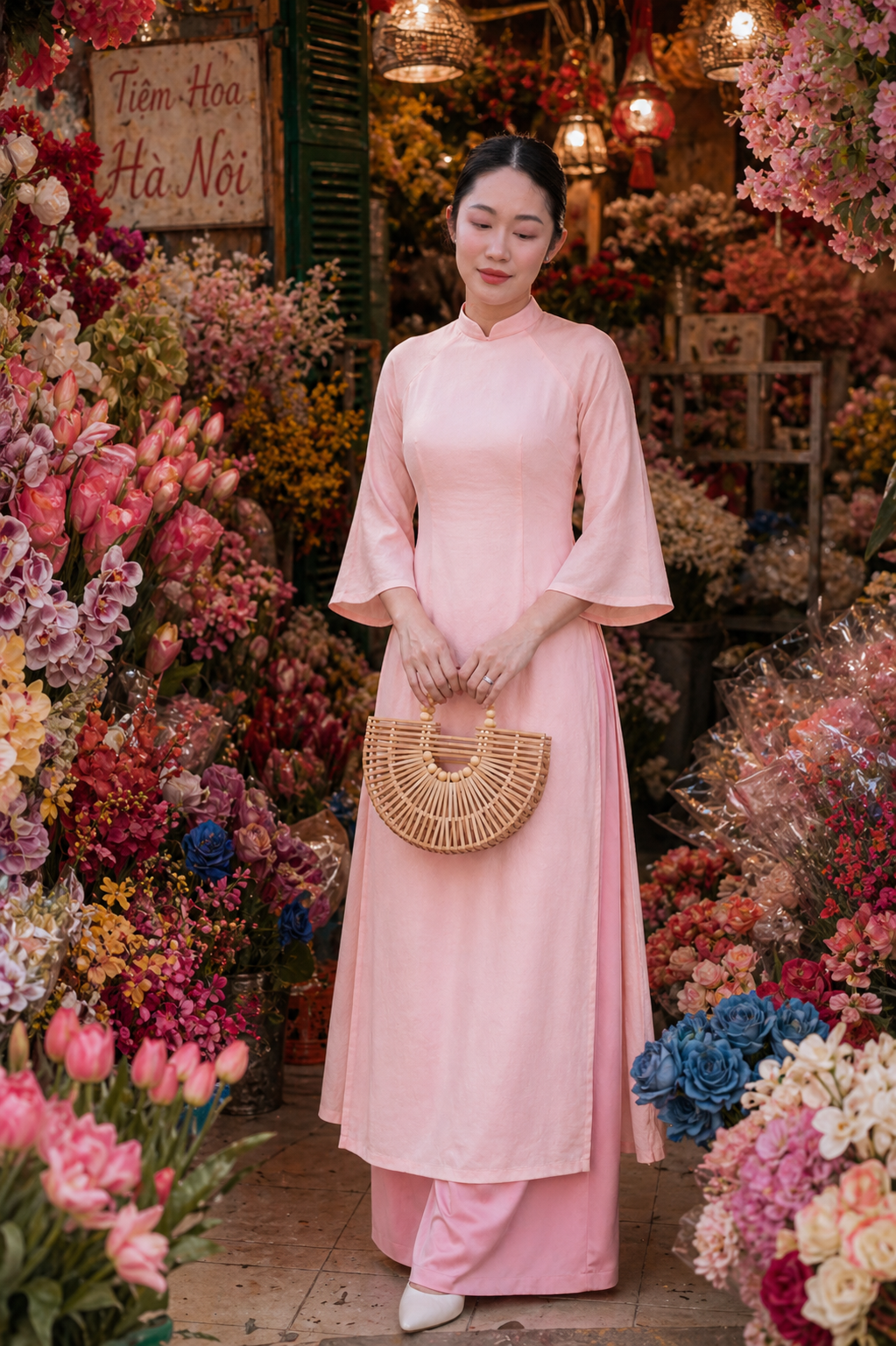
Pattern Overview: Fitted Áo Dài with Flared Sleeves
This digital áo dài PDF sewing pattern includes all the essential pieces needed to construct a traditional silhouette with a modern raglan sleeve variation.
You will be working with:
Front and back bodice pieces
Raglan sleeve sections (front and back)
Flared sleeve extensions for a soft, feminine finish
A structured mandarin collar
Optional facings or plackets depending on closure
This style is especially beginner-friendly compared to traditional fitted sleeves, making it a great starting point if you’re new to sewing áo dài garments.
Please note: this free pattern includes the dress only—you can pair it with your own pants or purchase our flowing pants pattern designed specifically for áo dài.
Why This Pattern is Perfect for Beginners
If you’re new to garment sewing, this easy áo dài sewing tutorial is designed to guide you step-by-step through the entire process.
Raglan sleeves are easier to attach than set-in sleeves
The back zipper creates a clean, modern finish
The flared sleeve adds visual interest without complex construction
The pattern is designed for home sewing machines
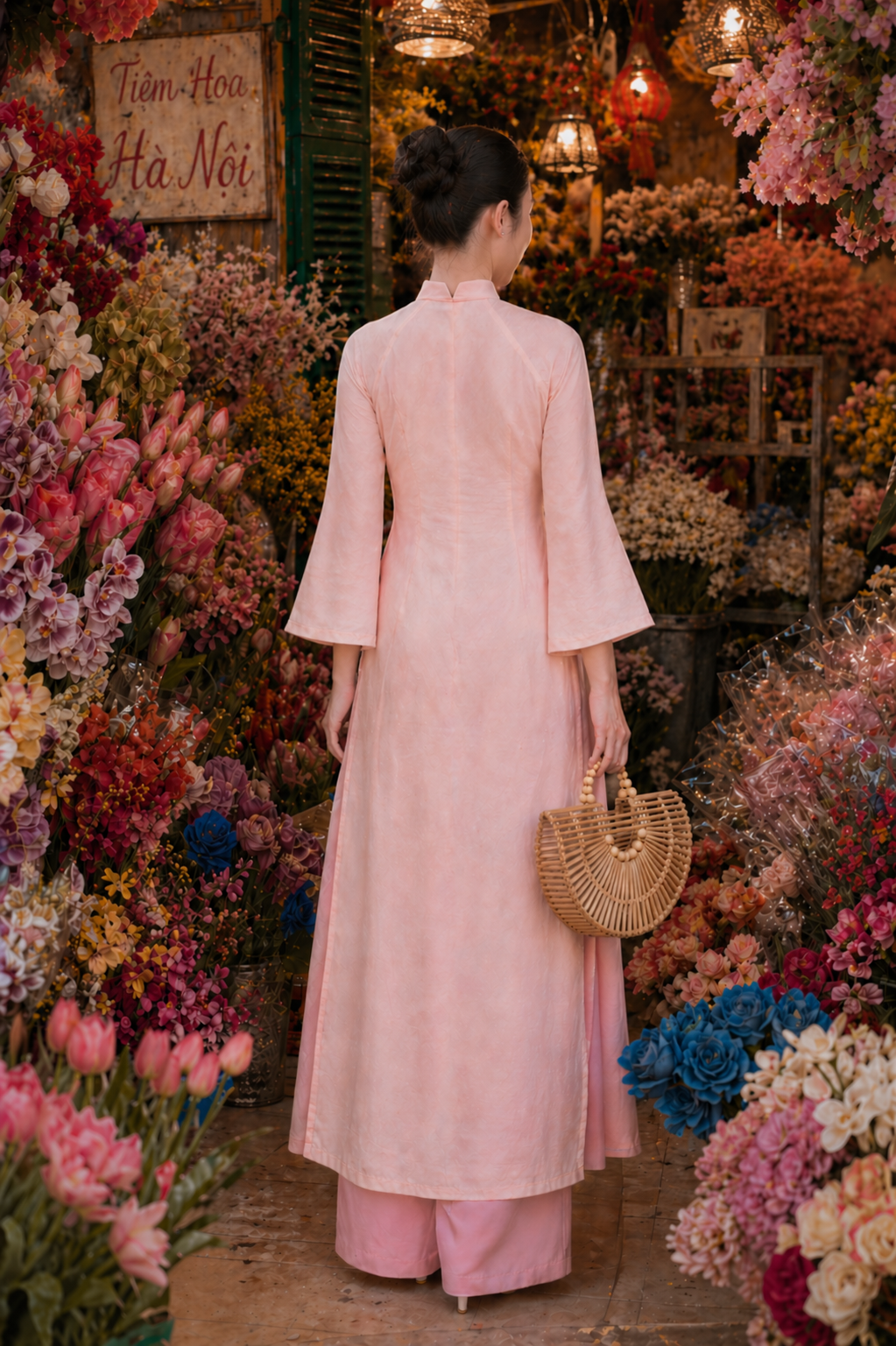
Choosing the right materials is essential when working with a Vietnamese áo dài sewing pattern, especially if you want that signature soft drape and elegant movement.
Recommended Fabrics
For best results, choose lightweight fabrics such as:
Silk (traditional and luxurious)
Satin (smooth and slightly structured)
Crepe (easy to sew and beginner-friendly)
Chiffon (best with lining for layering effects)
Soft brocade (for a more formal áo dài)
Lightweight polyester blends (budget-friendly option)
You will typically need 2.5–3 metres (2.7–3.3 yards) of fabric, depending on your size, fabric width, and how full you want the flared sleeves and panels to be.
Choosing the right fabric is one of the most important decisions when making an áo dài. For a detailed comparison of silk, satin, chiffon, linen, and other suitable fabrics, read our guide on choosing the right fabric for sewing an áo dài.
Read our guide on choosing the right fabric for sewing an áo dài
Taking Accurate Measurements for Your Áo Dài Pattern
Accurate measurements are key when working with a fitted áo dài sewing pattern, as the garment is designed to follow the natural curves of the body while still allowing movement.
Make sure to measure over close-fitting clothing and take note of the following:
Bust, waist, and hip circumference
Shoulder width and armhole depth
Sleeve length and arm measurements
Dress length and slit placement
Taking the time to measure carefully will ensure your custom áo dài fits beautifully and comfortably.
Get Free Ao Dai Measurement Template
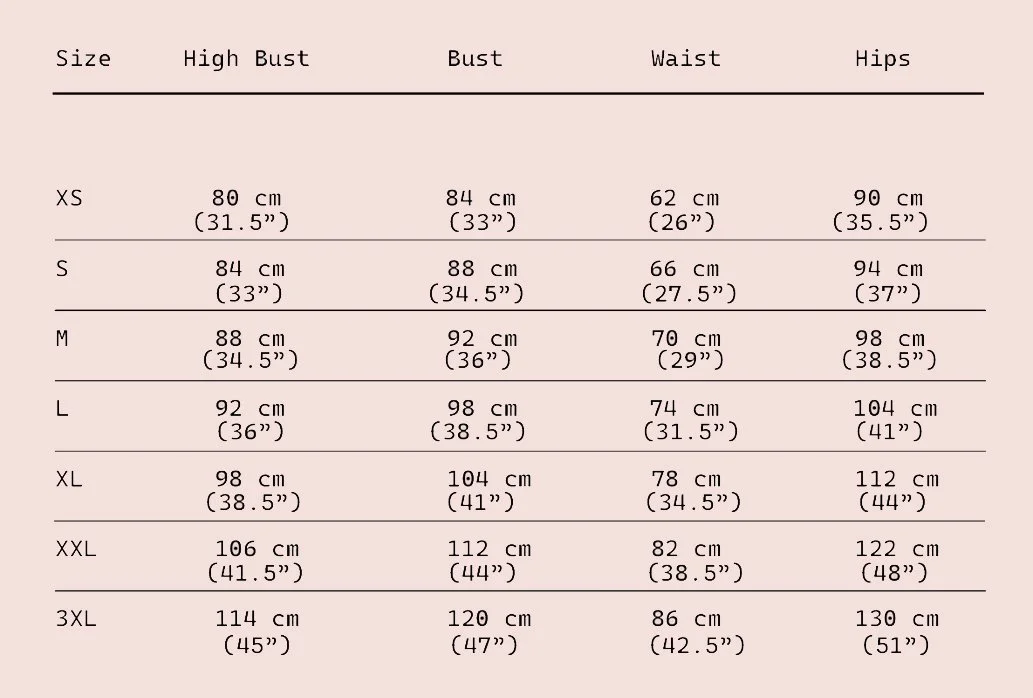
Size Chart (In Centimeters + Inches)
Before You Print
Before printing your pattern, please open the file using Adobe Acrobat Reader to ensure the layout and scaling are displayed correctly.
When printing, be sure to select 100% scale and avoid using the “fit to page” option, as this can distort the pattern size.
After printing, take a moment to verify accuracy by measuring the test square included in the file. Once the scale is confirmed, follow the provided layout diagram carefully to assemble all pages in the correct order.
Notes: The PDF is layered by size, so you can easily turn layers on or off to print only the size you need. Perfect for anyone searching for a free áo dài pattern, DIY Vietnamese dress, or easy sewing pattern for beginners, this design offers a simplified construction with beautiful, feminine results.
How To Assemble The Pattern
Begin by printing all pattern pages at 100% scale to maintain accurate sizing. To assemble, gently fold or trim the borders and align the matching circles or markers on each page so that the pattern lines connect smoothly.
Start taping from the center pages first, then gradually work outward—this helps keep everything aligned and reduces distortion for a cleaner final layout.
Make sure to assemble your pattern on a flat, stable surface to prevent any warping or misalignment. You can use clear tape if you prefer to see the pattern lines underneath, or a glue stick if you’re working with a larger layout and want a smoother finish.
Once all pages are securely assembled, carefully cut along the lines corresponding to your selected size using sharp scissors or a rotary cutter for the most precise result.

Sewing Instructions
1. Cut the Fabrics
From your fabric, cut:
• 1 front bodice (shoulder to hem, on fold)
• 1 back bodice (shoulder to hem, on fold with centre-back seam for zipper)
• 4 collar pieces
• 4 collar interfacing pieces
• 2 flared sleeves
2. Pressing the Pieces
• Before beginning construction, take the time to carefully press all of your fabric pieces using an iron, ensuring that any wrinkles, folds, or creases are smoothed out, as this will help the pieces lie flat, improve accuracy when aligning seams, and ultimately make the sewing process much easier and more precise.
3. Prepare the collar interfacings
While the iron is still on, let’s prepare the collar interfacings
• Fuse 2 pieces of interfacing to the wrong side of each collar piece. You should now have 2 sturdy collar halves.
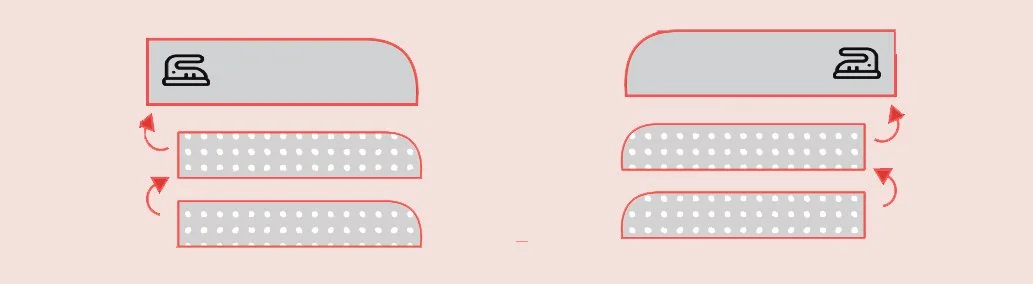
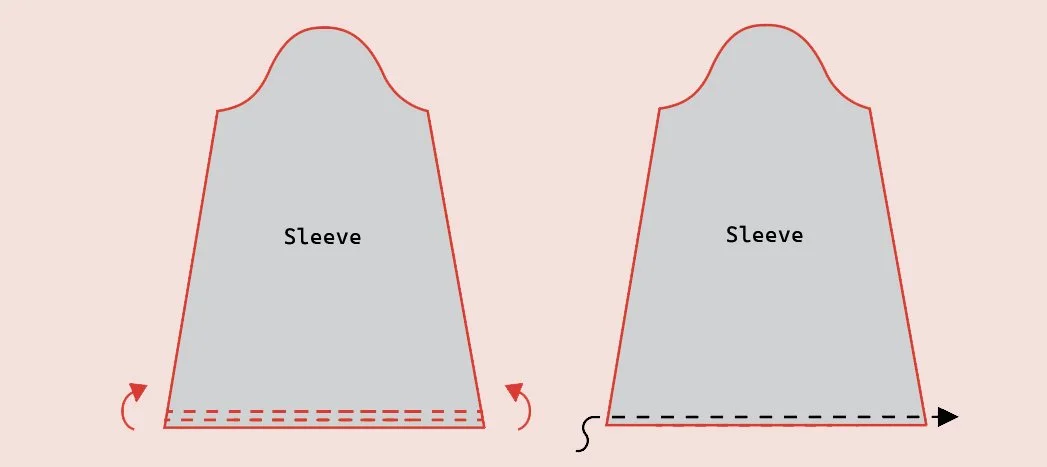
4. Prepare the Sleeve hems
• Fold the sleeve hem twice - about 1 cm each fold. Straight stich to secure. Repeat on the other sleeve.
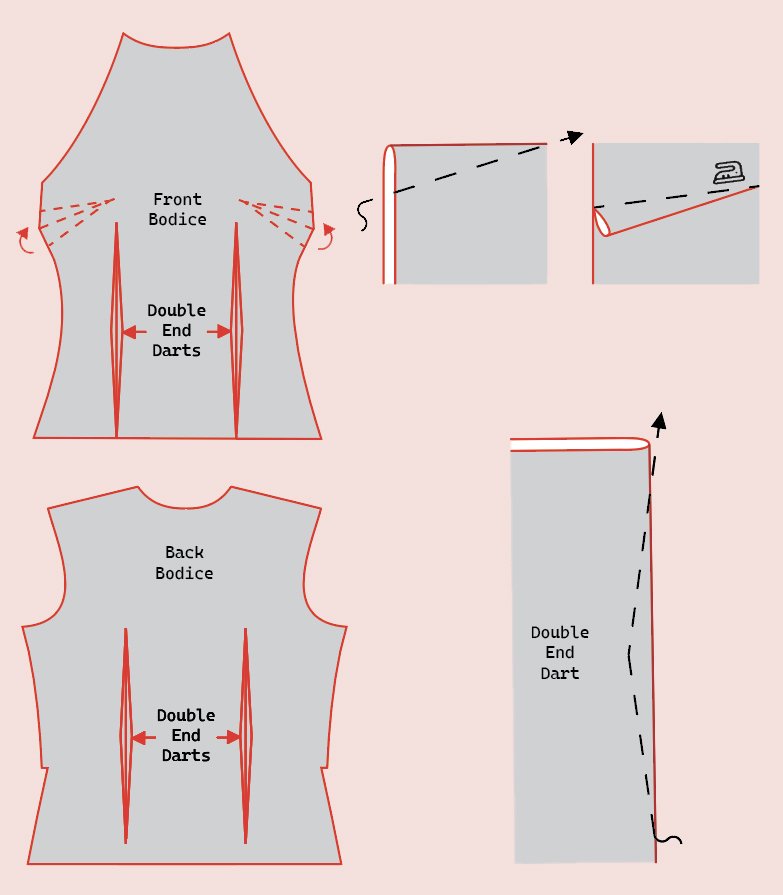
5. Sew the Bust & Waist Darts
• Sew the bust darts on the front bodice and pressing them toward the waist. Press and leave this aside for later.
• With right sides together of the front bodice, fold along the centre line of the double end dart and sew a straight stich so secure each darts. Repeat on the other side.
• For the back bodice, with right sides together, fold along the centre line of the double end dart. Sew a straight stitch to secure. Repeat for the opposite side.
6. Insert the Invisible Zipper
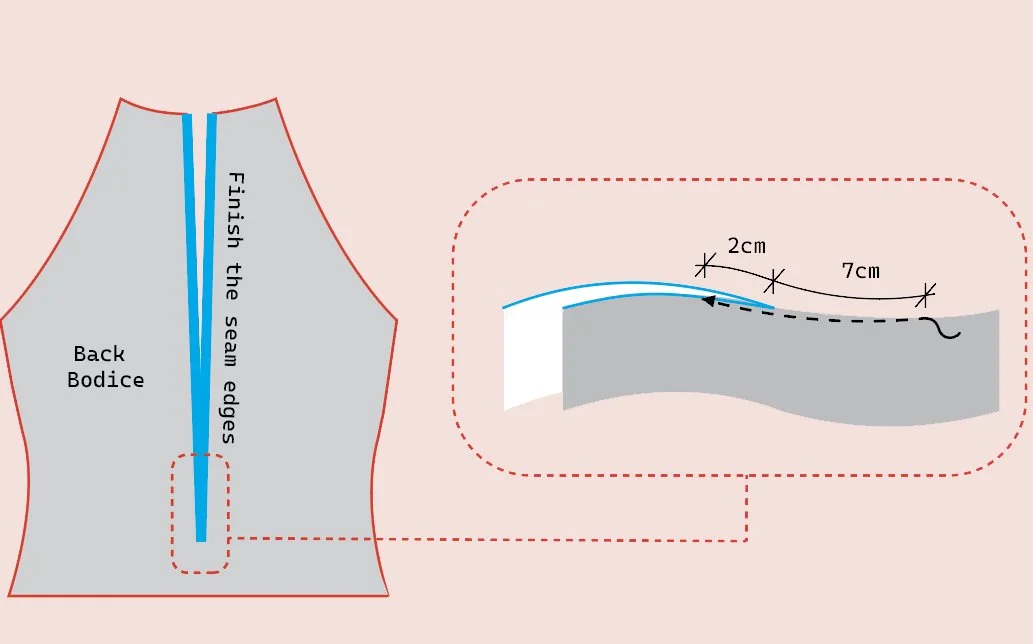
• Finish the centre-back seam edges on the back bodice separately.
• Fold the centre-back seam in half, right sides together, and at the end of the back slit, Mark a line that’s 2 centimetres up from the end of the slit and 7 centimetres down — an 9 centimetres line in total.
• Straight stitch along this line to make sure the zipper ends neatly.
• Place the invisible zipper face down on the right side of one back edge.
• Position the plastic stopper about 6 mm below the neckline to leave space for attaching the collar later.
• Mark small matching notches along the zipper tape and the edge of the bodice slit.
• Match notches to the other side of the zipper and do the same for the other seam of the bodice.
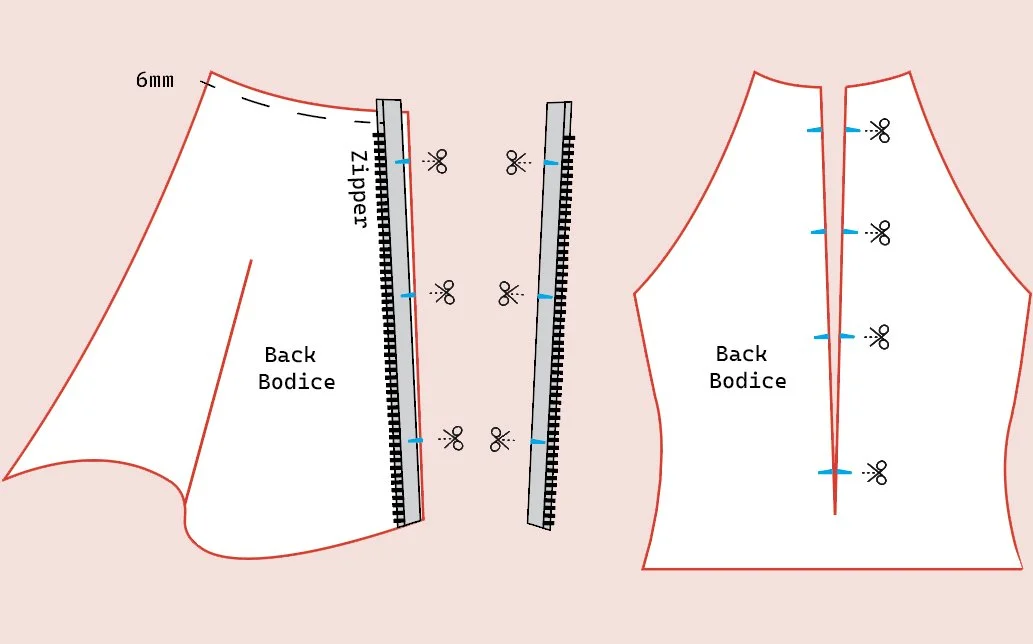
• With the zipper fully open, align right sides together, match the notches, and pin carefully. Repeat on the other side.
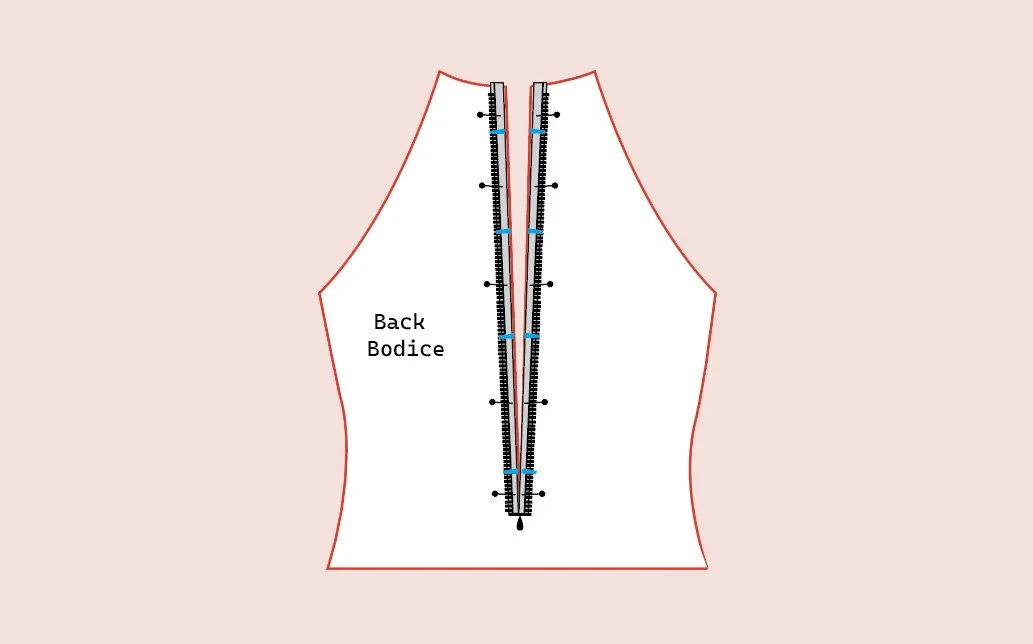
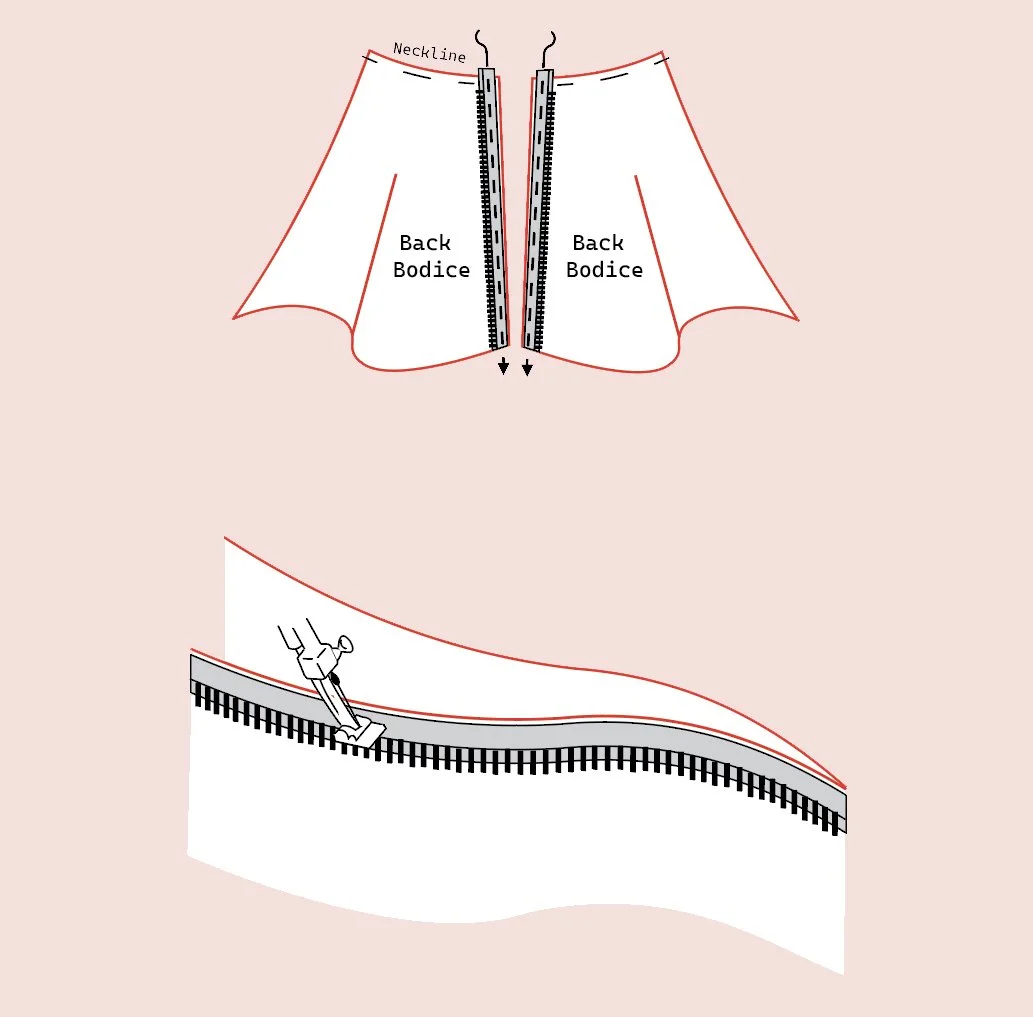
• Baste the zipper in place, then sew permanently with an invisible zipper foot.
• Stopping at the marked line as indicated in the pattern.
• Fold the zipper under the seam allowance to hide it neatly.
Tips: Make sure to use one hand to gently pull the zipper teeth away from the needle so you can stitch as close to the teeth as possible.
7. Attach Sleeves to Bodice
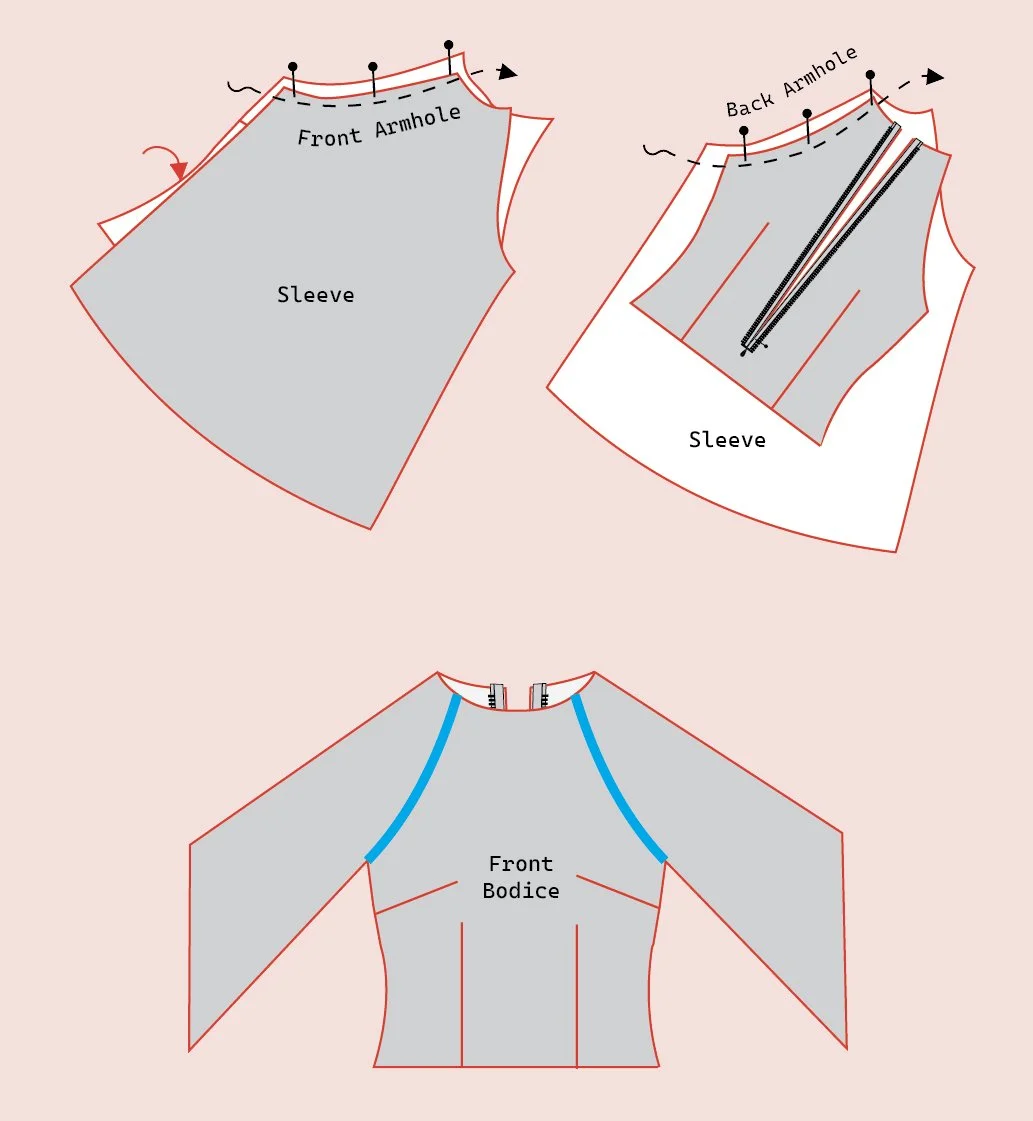
• With the right sides together, match the front armhole notch on the sleeve to the front bodice armhole.
• Pin and sew. Repeat for the other sleeve.
• Do the same with the back bodice pieces.
• Finish armhole raw edges with an overlocker, or zig-zag if you don’t have one.
8. Sew Side Seams & Finish Áo Dài Panel Edges
• With right sides together, pin from sleeve hem down to the waist slit mark, ensuring underarms align. Stitch and backstitch securely at the slit opening.
• Overlock or zig-zag raw edges from sleeve hem to slit.
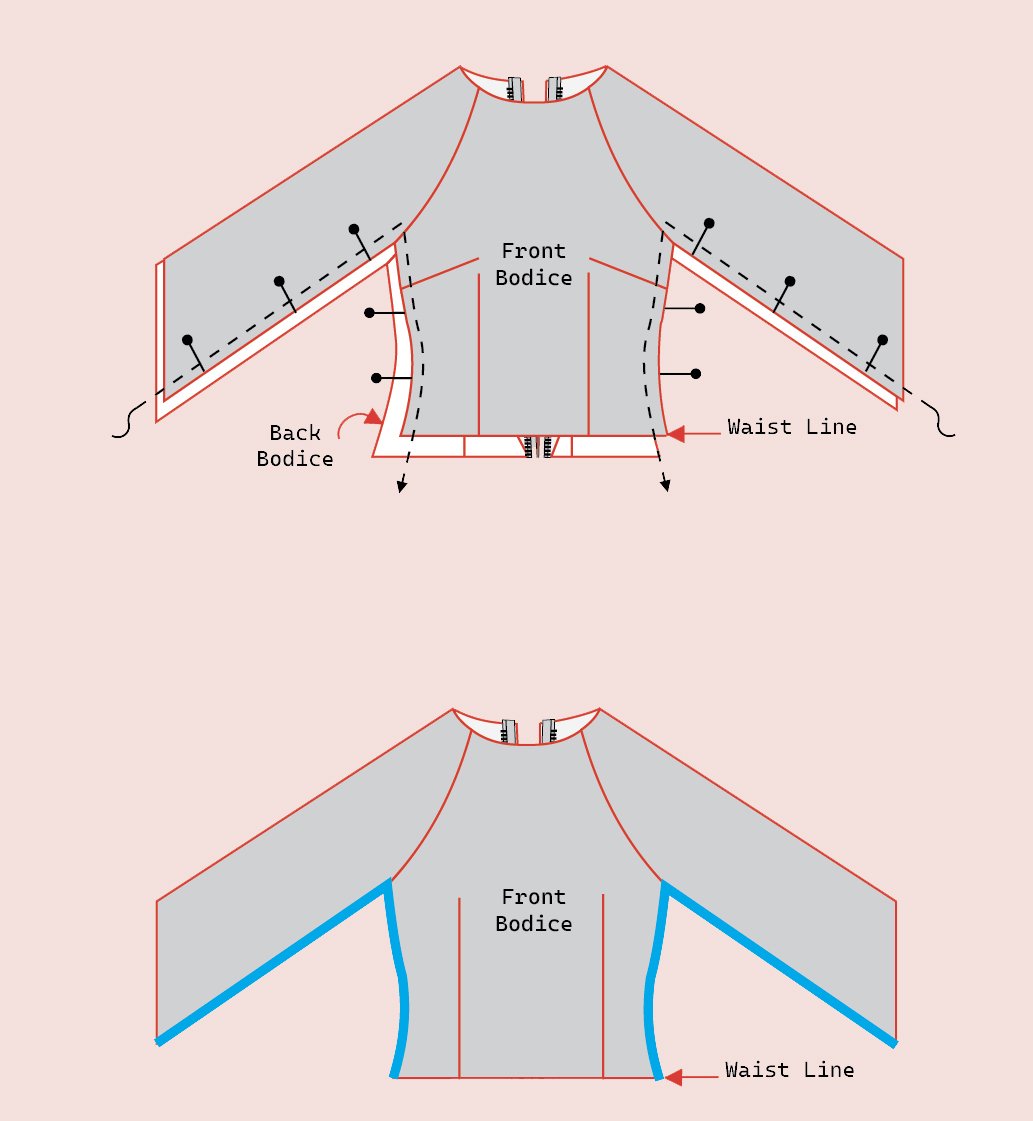
• For each slit: double-turn the edges (0.5 cm + 0.5 cm), press, and stitch neatly up to the waist slit and continue across to the other side.
• Repeat with the remaining slit.
• For the hem: double-turn (1 cm + 1 cm), press, and stitch.
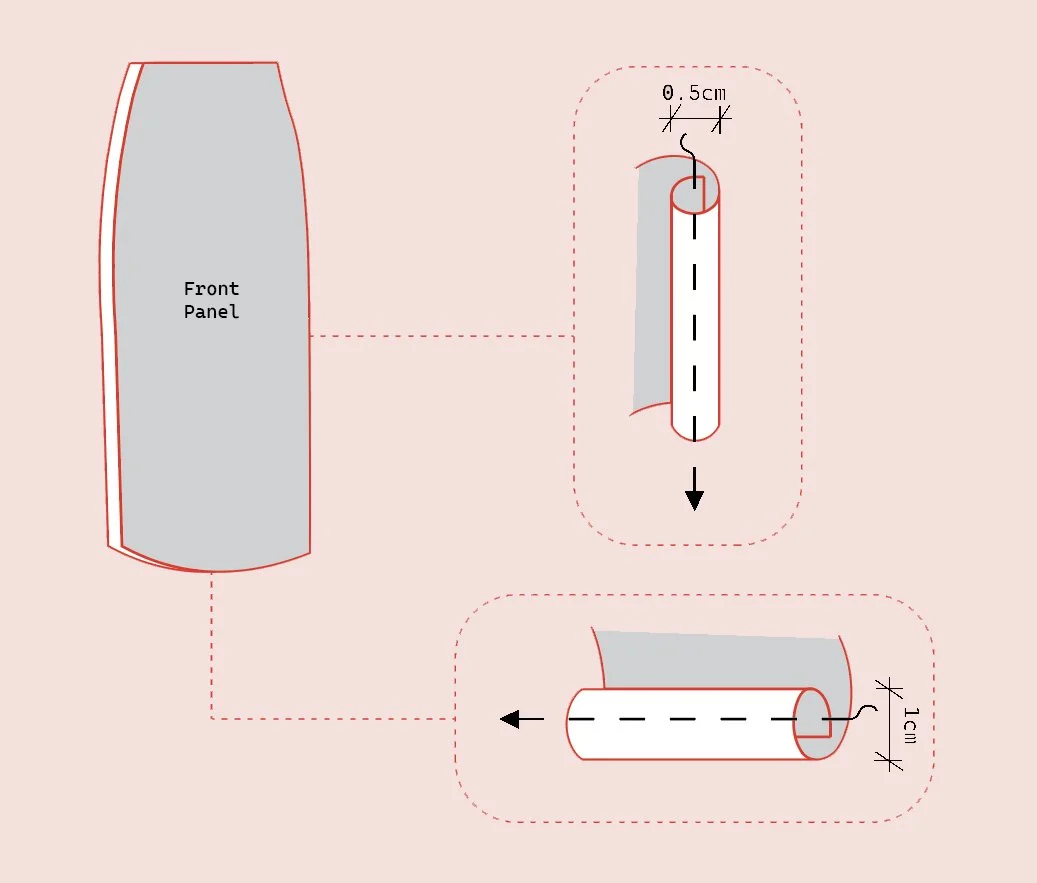
9. Sew the Collar
• Place each pair of collar pieces right sides together.
• Pin in place, then stitch around the curved outer edge and square corner, sewing 2 mm away from the interfacing. DO NOT stitch the bottom edge.
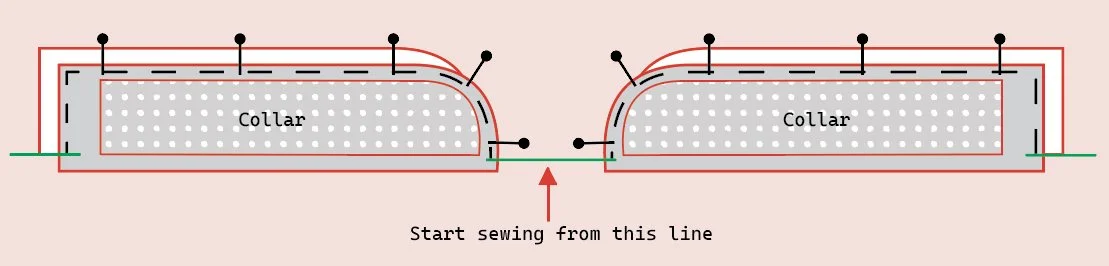
• Trim the collar seam allowance by 2mm, turn right side out, and press flat.
• Baste around the neckline edge of the bodice to keep it stable.
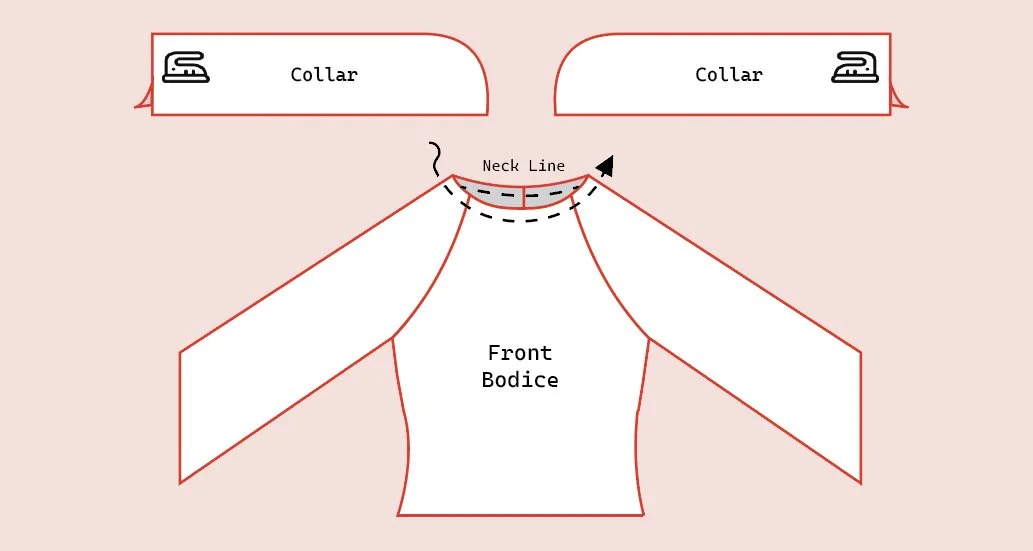
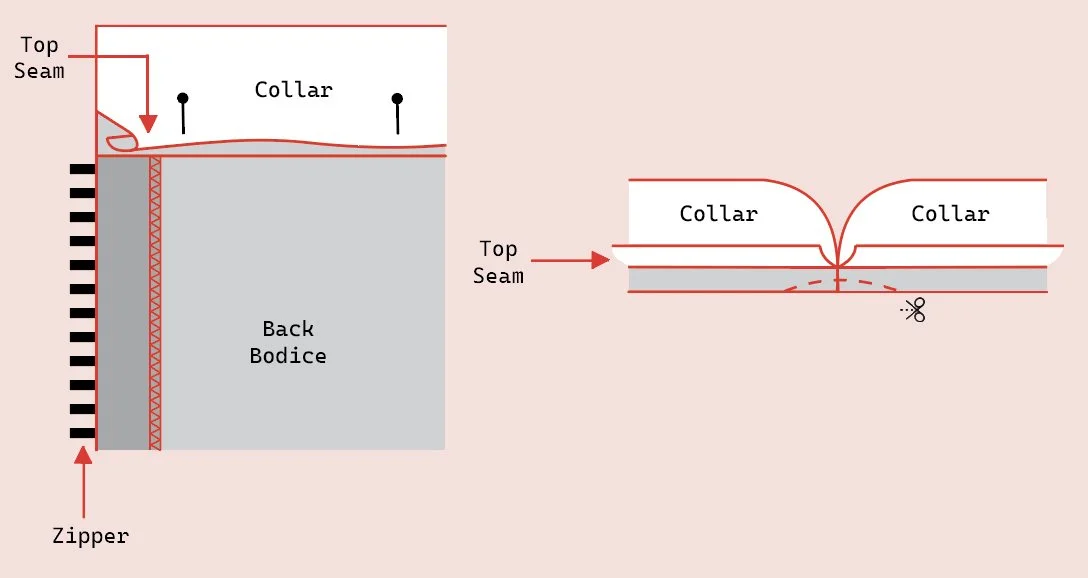
• With right sides together, pin each collar half to the neckline along the bottom seam only, starting at the centre front. Sew along the neckline, leaving the top seam of the collar free.
• At each collar end, fold the invisible zipper inward and tuck it neatly inside the collar pocket.
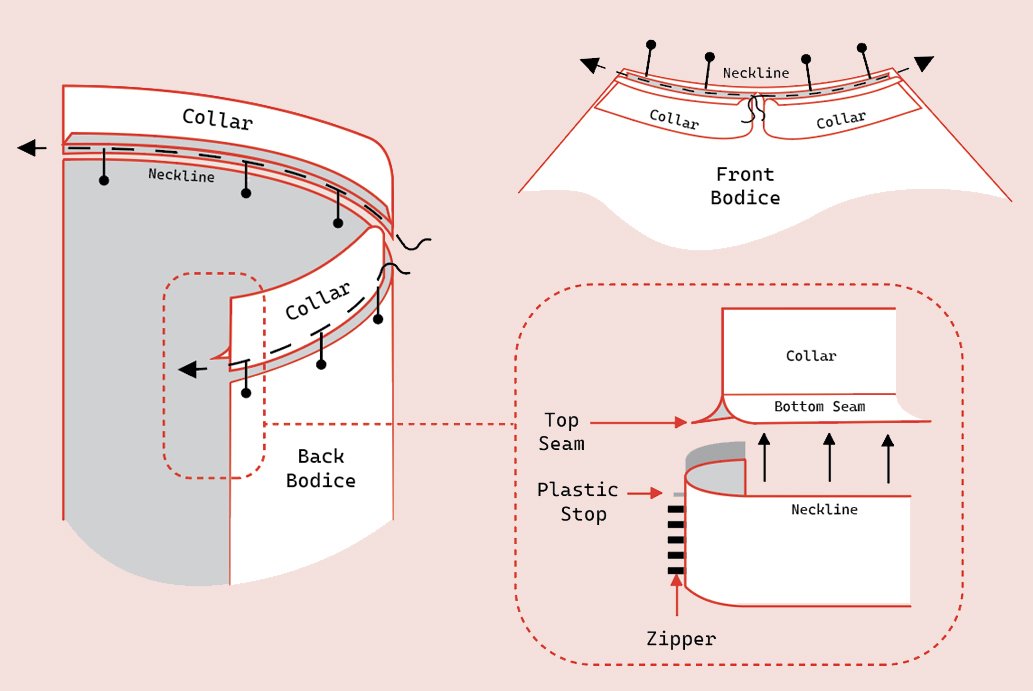
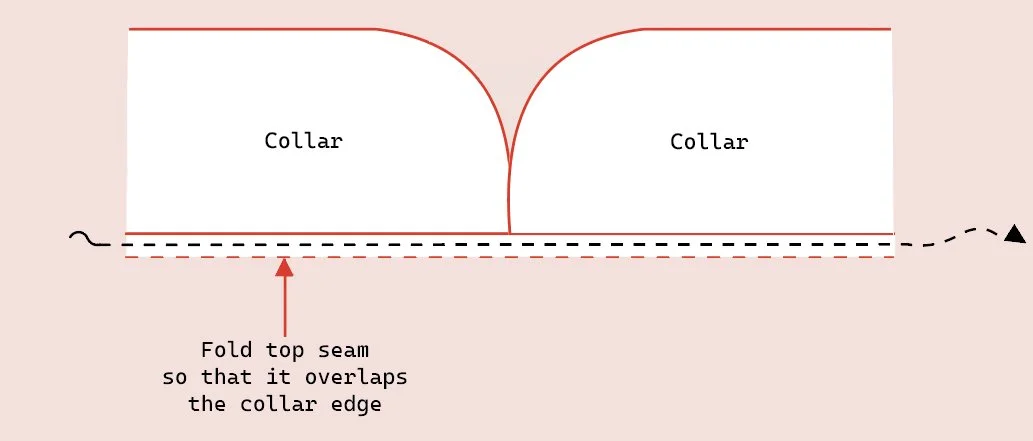
• Fold the top seam allowance inward, pin carefully so the fold overlaps the collar edge at the front. Sitch by hand or machine to secure.
• For beginners, hand stitching works beautifully. Start stitching neatly from the zipper end to the centre, then cross over to the other collar half. Take your time to keep it neat and precise.
• To make stitching easier. Take a scissor and slightly trim a small arc at the centre.
Finally, the finishing touches. Press all seams, hems, and the neckline carefully.
And there you have it — your fitted ao dai with flare sleeves is complete. Ready to wear and perfect for any special occasion
Once completed, your handmade áo dài will be a beautiful combination of tradition and personal creativity. Whether you wear it for special occasions, cultural events, or everyday elegance, this DIY áo dài sewing project is both rewarding and meaningful.
Common Áo Dài Fitting Problems (And How to Fix Them)
Even with a well-drafted áo dài sewing pattern, small fitting issues can appear during construction. Here are some of the most common problems and how to correct them for a polished, professional finish.
Collar Too Tight
A mandarin collar should sit comfortably against the neck without restricting movement or making it difficult to button.
Possible causes:
Neck measurements were taken too tightly.
Seam allowances reduced the finished collar size.
The collar was attached with excessive tension.
How to fix it:
Double-check your neck measurement before cutting.
Add 0.5–1 cm of ease for comfort.
If the garment is already sewn, consider reducing the seam allowance along the collar or recutting the collar with a slightly longer neckline measurement.
Bust Pulling or Gaping
Horizontal wrinkles or pulling across the bust usually indicate that the bodice does not have enough room through the chest area.
Possible causes:
The bust measurement was underestimated.
The fabric has little or no stretch.
The bust dart placement is incorrect.
How to fix it:
Perform a Full Bust Adjustment (FBA) on the pattern.
Increase seam allowances at the side seams if additional fabric is available.
Check that bust darts point toward the fullest part of the bust without extending all the way to the apex.
Wrinkles at the Side Seams
Diagonal wrinkles running from the waist or hip toward the side seams often indicate a fit imbalance.
Possible causes:
The garment is too tight through the hips.
Front and back pattern pieces are not balanced.
The side seams have stretched during sewing.
How to fix it:
Compare your hip measurement to the finished garment measurement.
Let out the side seams if possible.
Press seams carefully during construction to maintain the garment's shape.
Raglan Sleeve Drag Lines
One of the most common issues with raglan sleeve áo dài patterns is drag lines extending from the underarm toward the neckline or shoulder.
Possible causes:
The sleeve cap is too short or too long.
The armhole shape does not match the wearer's shoulder slope.
The sleeve was eased unevenly during sewing.
How to fix it:
Check that the front and back raglan seams match accurately.
Adjust the shoulder slope on the pattern if necessary.
Baste the sleeve before final stitching to test the fit.
Side Slit Placement Issues
The side slits are one of the defining features of a traditional Vietnamese áo dài. Incorrect placement can affect both appearance and comfort.
Possible causes:
Slits are positioned too high or too low.
Front and back slit markings do not align.
The slit opening was not reinforced properly.
How to fix it:
Mark slit placement carefully before sewing.
For a traditional look, the slit typically begins at or slightly above the natural waist.
Reinforce the top of the slit with secure stitching to prevent tearing during wear.
Final Fitting Tip
Before finishing hems, collars, and closures, try on your áo dài and check the fit from every angle. Small adjustments made during construction are often much easier than alterations after the garment is completed. Taking the time to perfect the fit will result in an áo dài that is both comfortable to wear and beautifully tailored.
If you enjoyed this tutorial, be sure to explore more digital áo dài sewing patterns and printable PDF patterns available in the shop — including different sleeve styles and modern designs.


DOWNLOAD FILE
Frequently Asked Questions About Sewing an Áo Dài
How much fabric do I need to sew an áo dài?
The amount of fabric needed depends on your size, the length of the garment, and the width of the fabric. Most adult áo dài require approximately 2.5–3 metres (2.7–3.3 yards) of fabric for the tunic. If you are also sewing matching pants, you may need an additional 1.5–2 metres (1.6–2.2 yards). Always check your pattern layout before purchasing fabric.
Is an áo dài difficult to sew?
An áo dài is considered an intermediate sewing project because it combines a fitted bodice, high mandarin collar, side slits, and precise finishing techniques. However, a beginner with basic sewing skills can successfully make an áo dài by following a step-by-step pattern and tutorial.
What fabric is best for an áo dài?
Lightweight fabrics with beautiful drape are traditionally used for áo dài. Popular choices include silk, silk charmeuse, chiffon, crepe, satin, and lightweight linen blends. For beginners, cotton lawn or rayon can be easier to sew while still creating an elegant silhouette.
Can beginners sew an áo dài?
Yes. While some techniques such as attaching the collar and fitting the bodice require patience, many beginners successfully sew their first áo dài using a well-designed sewing pattern. Taking accurate measurements and making a test garment can help achieve a better fit.
What is the difference between a traditional and modern Vietnamese áo dài?
A traditional áo dài typically features a fitted silhouette, high mandarin collar, long sleeves, and floor-length panels worn over loose-fitting pants. Modern áo dài designs often experiment with shorter lengths, different sleeve styles, lower collars, contemporary fabrics, and fashion-forward details while preserving the garment's iconic shape.
What measurements do I need for an áo dài sewing pattern?
Most áo dài patterns require measurements for the bust, waist, hips, shoulder width, neck circumference, sleeve length, and overall garment length. Accurate measurements are essential for achieving the close-fitting silhouette that makes an áo dài so elegant.
Should I make a toile before sewing my final áo dài?
Yes. Sewing a toile (test garment) from inexpensive fabric allows you to check the fit before cutting into your final fabric. This is especially helpful when making a fitted áo dài, as small adjustments to the bust, waist, collar, or hips can significantly improve the finished result.
Can I sew an áo dài without a serger?
Absolutely. A serger is helpful but not required. You can finish seams using a zigzag stitch, French seams, bias binding, or other seam-finishing methods available on a standard sewing machine.
What closure is used on an áo dài?
Modern áo dài commonly use an invisible zipper along the side seam, shoulder seam, or centre back. Traditional styles may also feature decorative buttons or frog closures along the collar and shoulder area.
