How to Sew an Invisible Zipper for an Áo Dài
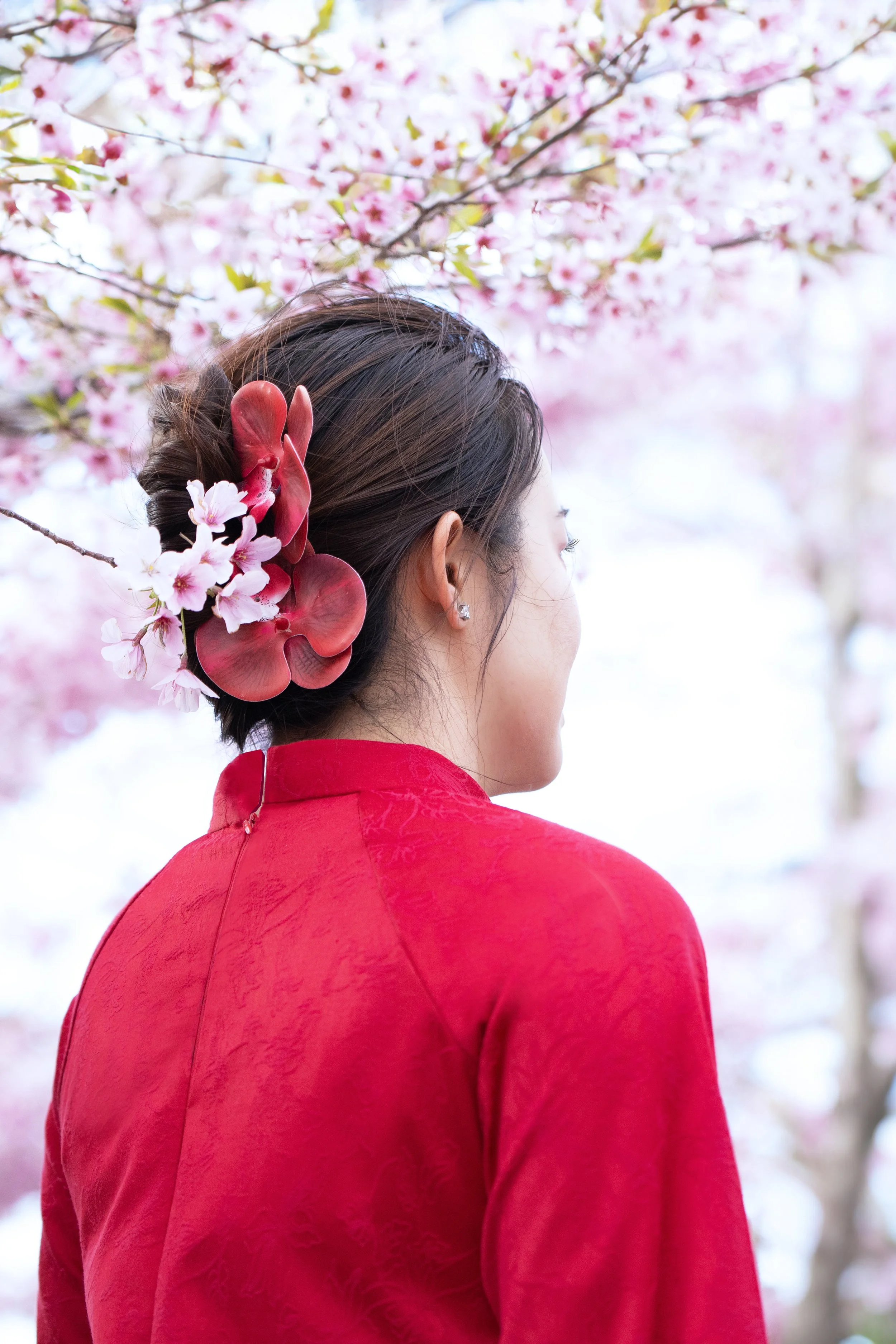
An invisible zipper is one of the best finishes for an áo dài because it creates a clean, elegant look while maintaining the garment’s smooth silhouette. Unlike regular zippers, the teeth are hidden inside the seam, making the closure almost undetectable from the outside.
In this tutorial, you’ll learn how to insert an invisible zipper into the back bodice of an áo dài neatly and professionally.

Why Use an Invisible Zipper?
The áo dài is known for its fitted shape and graceful lines. A visible zipper can interrupt that smooth appearance, while an invisible zipper blends seamlessly into the centre-back seam.
Benefits of an invisible zipper include:
A polished, couture-style finish
Smooth fit along the body
Less bulk around the back opening
Better visual flow for delicate fabrics and prints
What You’ll Need
Before starting, prepare the following tools and materials:
Invisible zipper
Invisible zipper foot
Sewing machine
Pins or clips
Hand sewing needle
Matching thread
Iron
Zigzag stitch or overlocker/serger
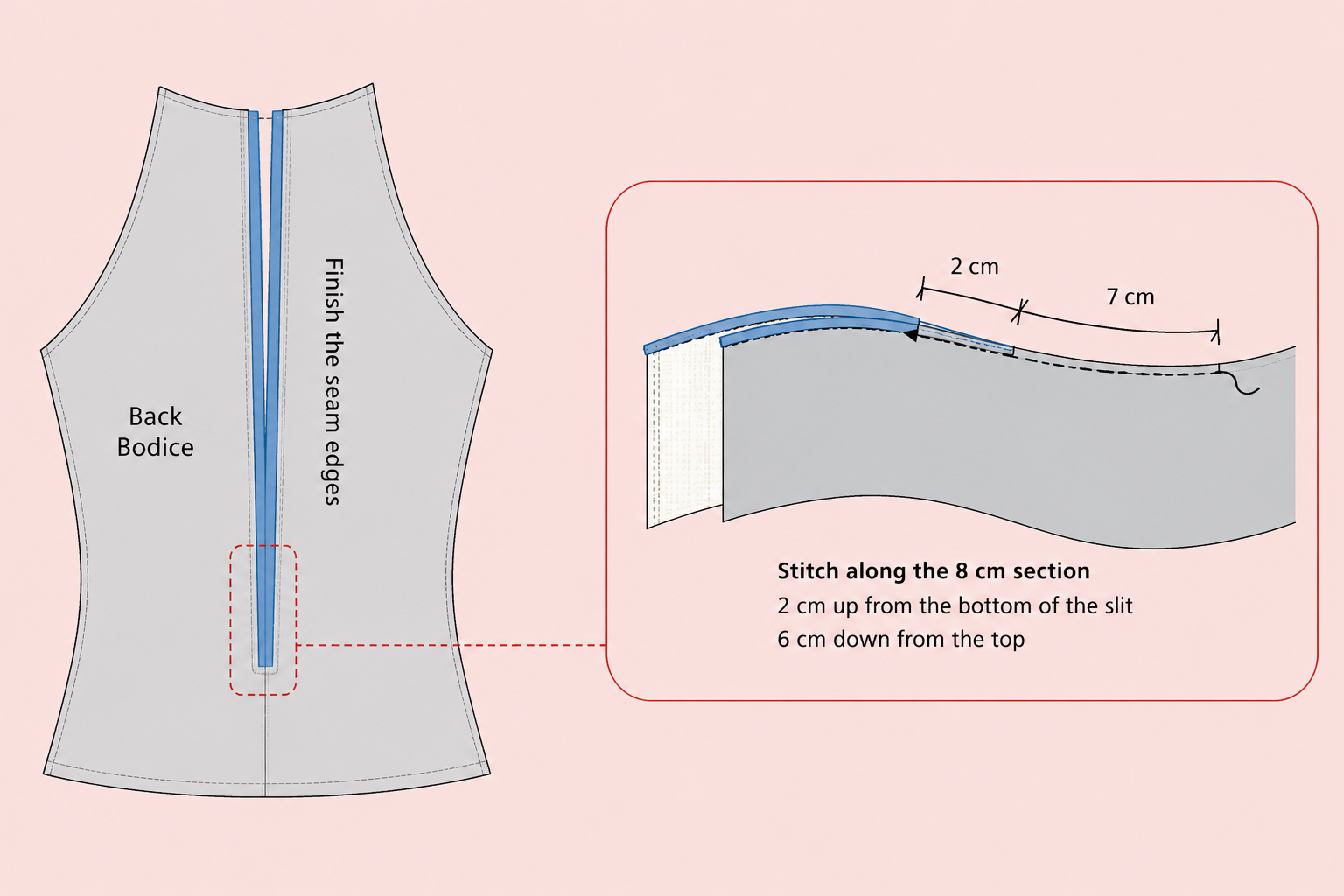
Step 1: Prepare the Centre-Back Seam
Begin by finishing both centre-back seam edges using either a zigzag stitch or an overlocker. This helps prevent fraying and gives the inside of the garment a clean finish.
Next, fold the back bodice pieces right sides together.
At the back slit area, mark an 8 cm stitching section:
2 cm above the bottom of the slit
6 cm below the top edge
Sew along this marked line using a straight stitch to close the slit neatly and create a stable base for the zipper insertion.
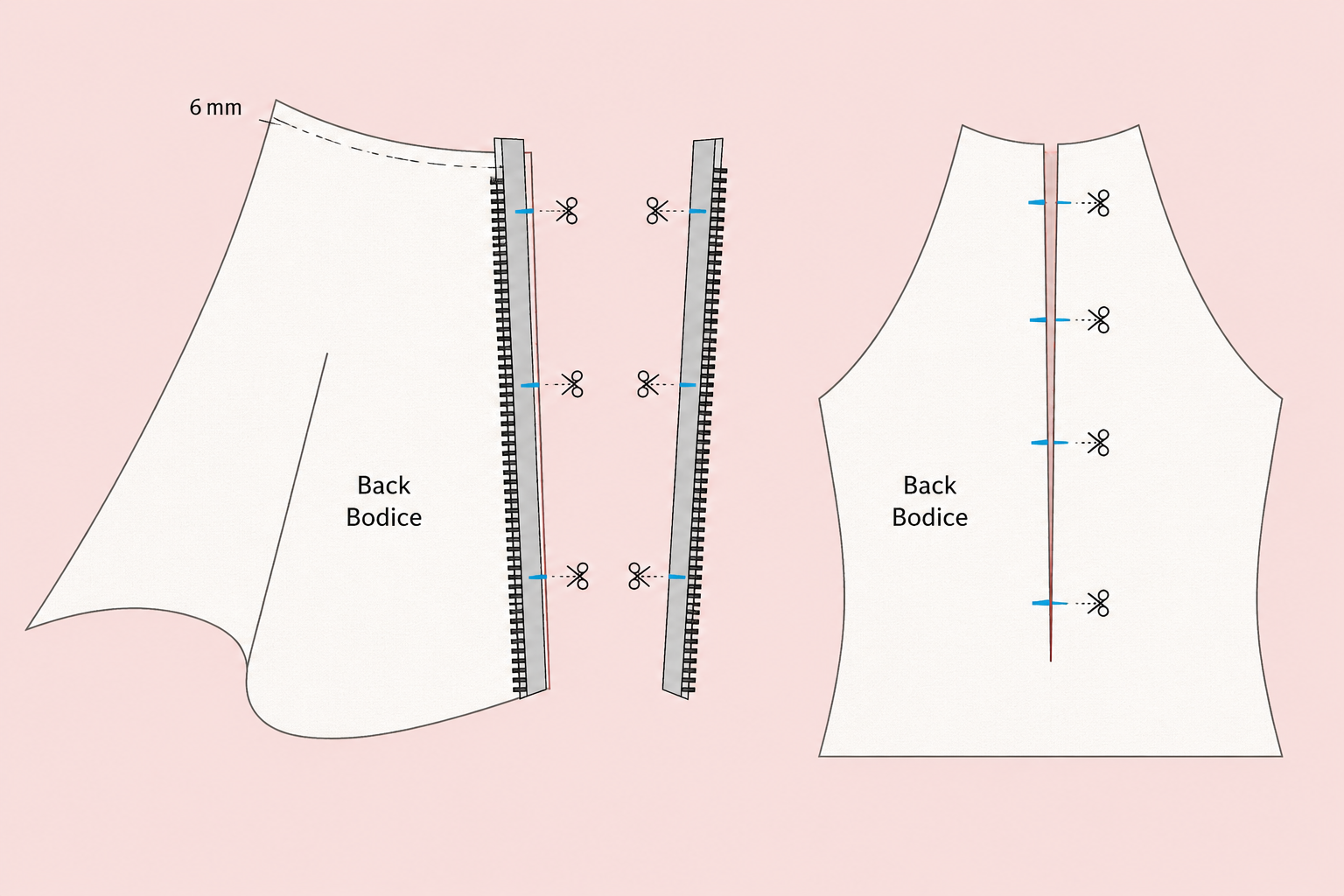
Step 2: Position the Invisible Zipper
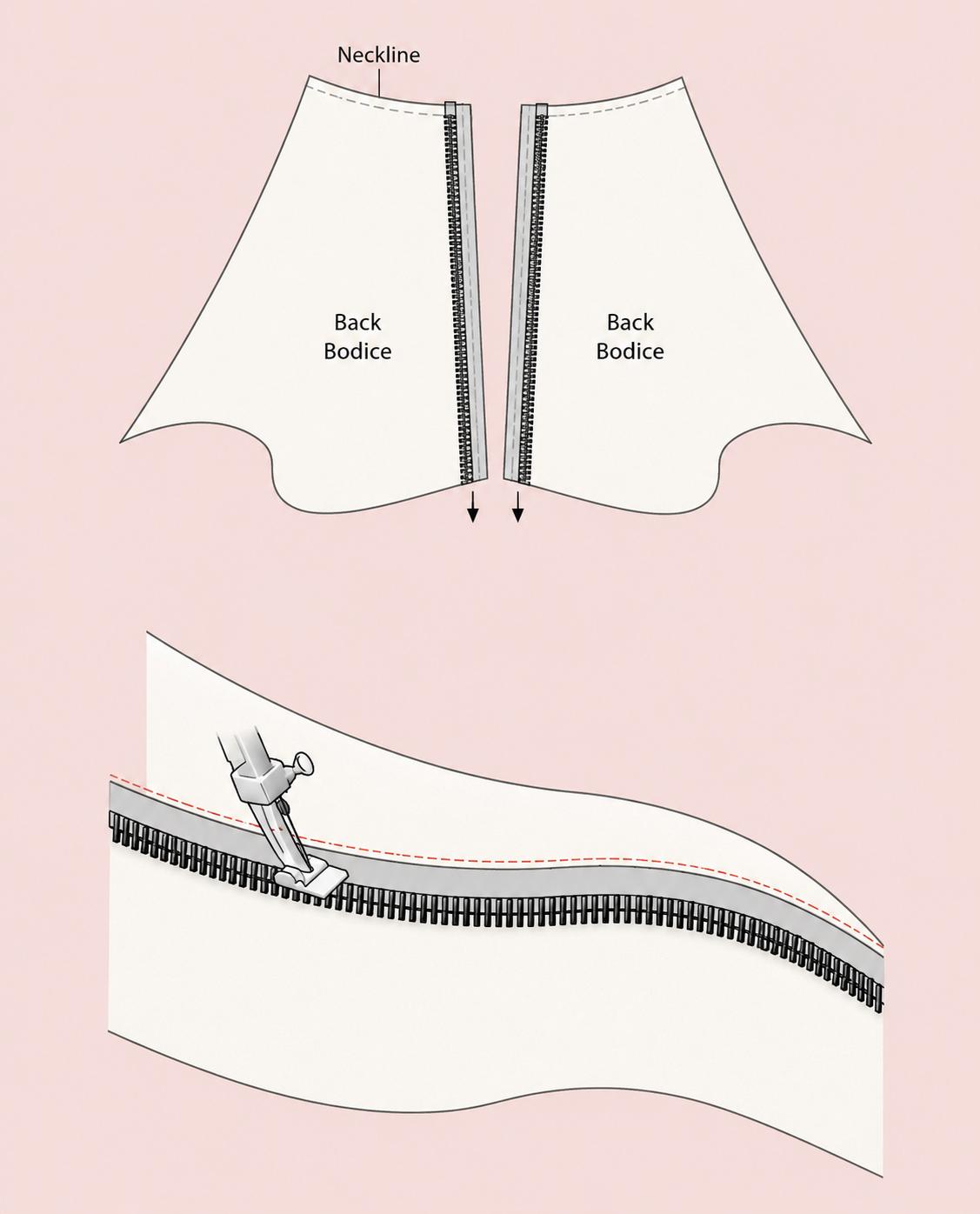
Place the invisible zipper face down on one side of the back opening. The zipper teeth should align directly along the seam line.
Position the top of the zipper approximately 6 mm below the neckline. This extra space allows room for attaching the áo dài collar later.
Carefully match any notches or seam markings between the zipper tape and the fabric edge. Accurate alignment is important to ensure both sides sit evenly once the zipper is closed.
Repeat the same process on the opposite side of the back opening.
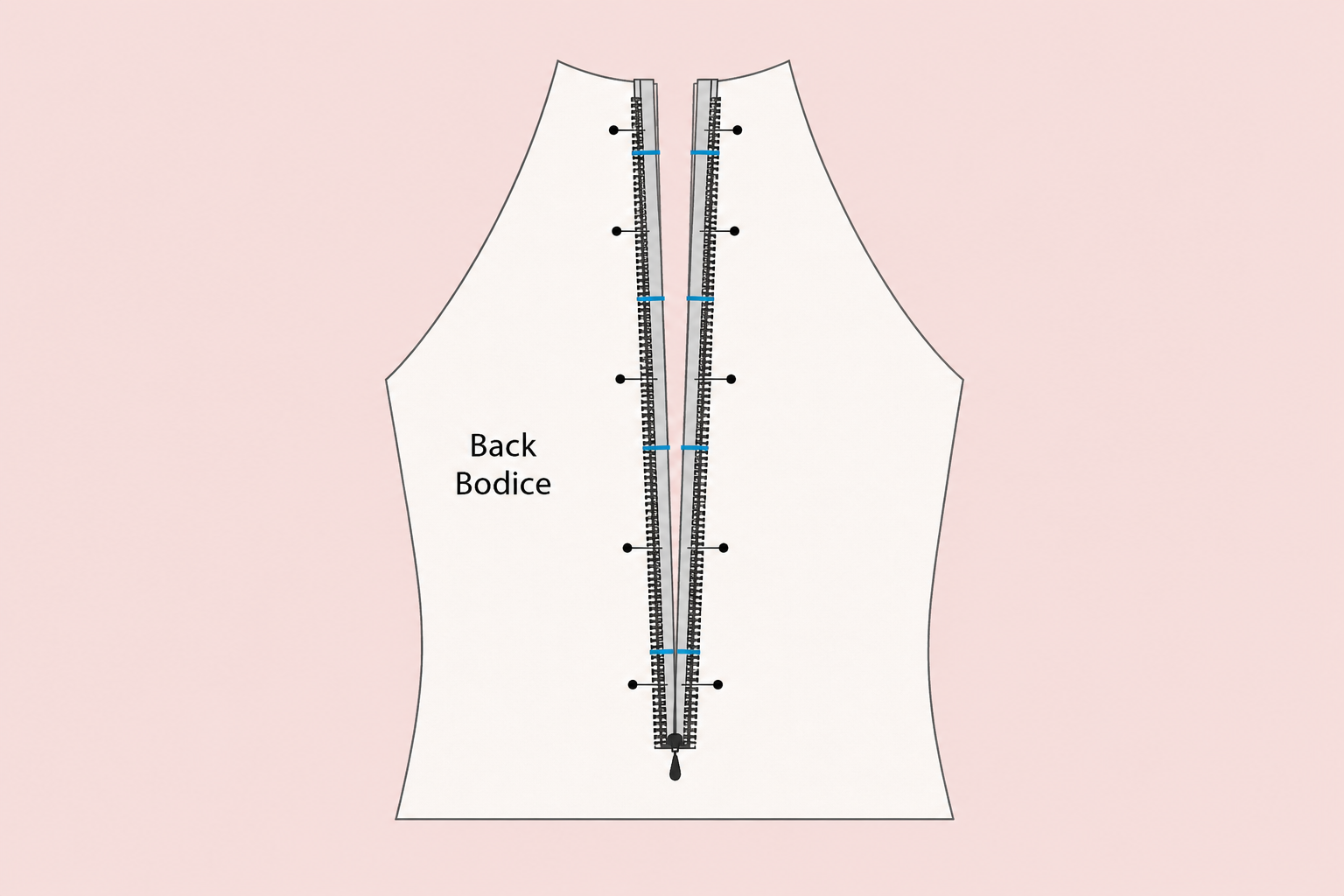
Step 3: Pin and Baste the Zipper
Open the zipper fully before sewing.
With right sides together, align the zipper tape to the fabric edge and pin carefully in place. Take your time here — uneven pinning can cause twisting or mismatched seams.
For greater accuracy, baste the zipper by hand or with a long machine stitch before final sewing. This helps keep delicate áo dài fabrics stable while stitching.
Step 4: Sew the Invisible Zipper
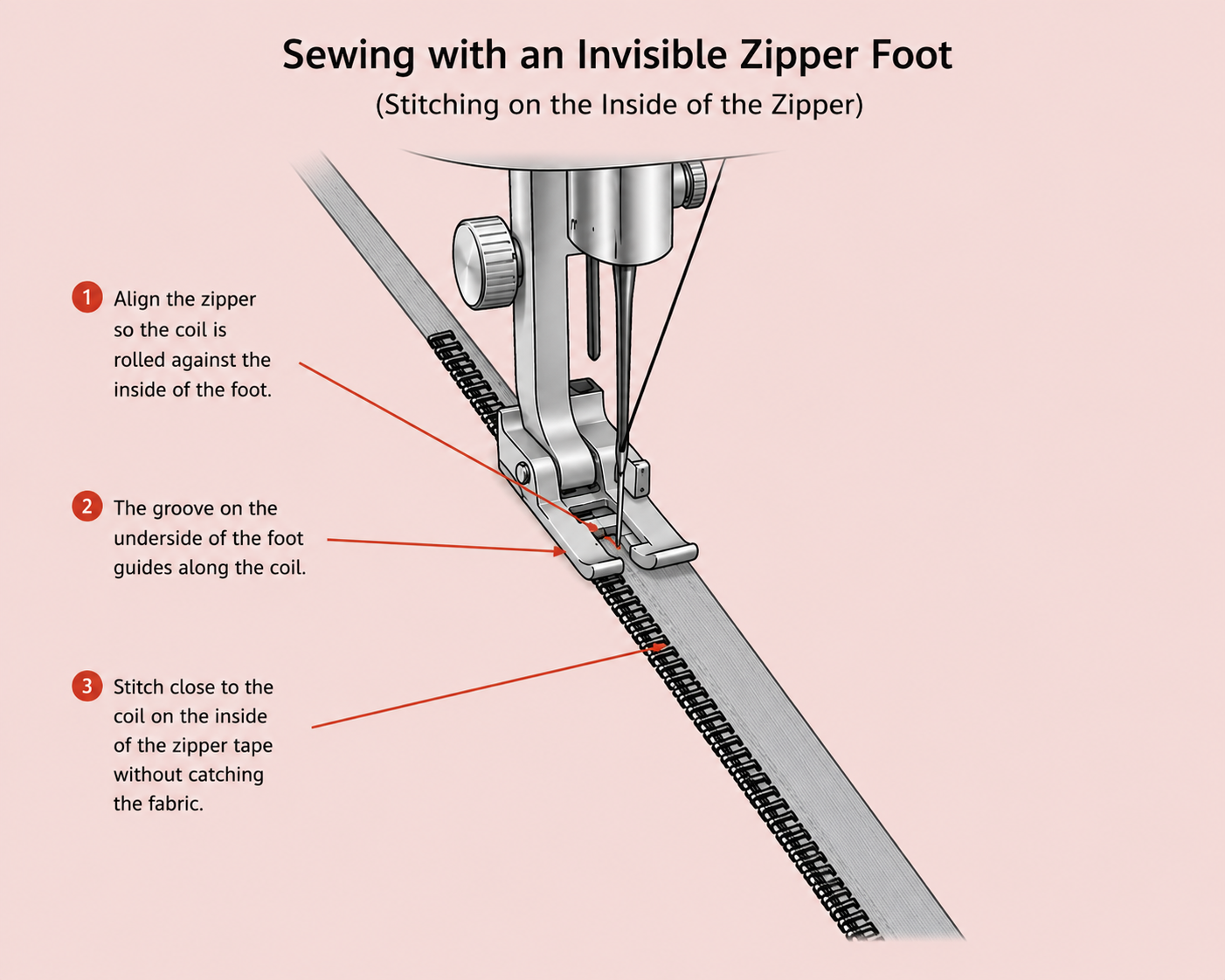
Attach the invisible zipper foot to your sewing machine.
As you sew, gently roll the zipper teeth aside with your fingers so the needle can stitch close to the coil. Stitch from the top downward, stopping precisely at the marked stitching line.
Repeat on the opposite side.
Once both sides are sewn, close the zipper to check that:
The neckline aligns evenly
The seam sits flat
The zipper remains hidden
Step 5: Secure the Bottom of the Zipper
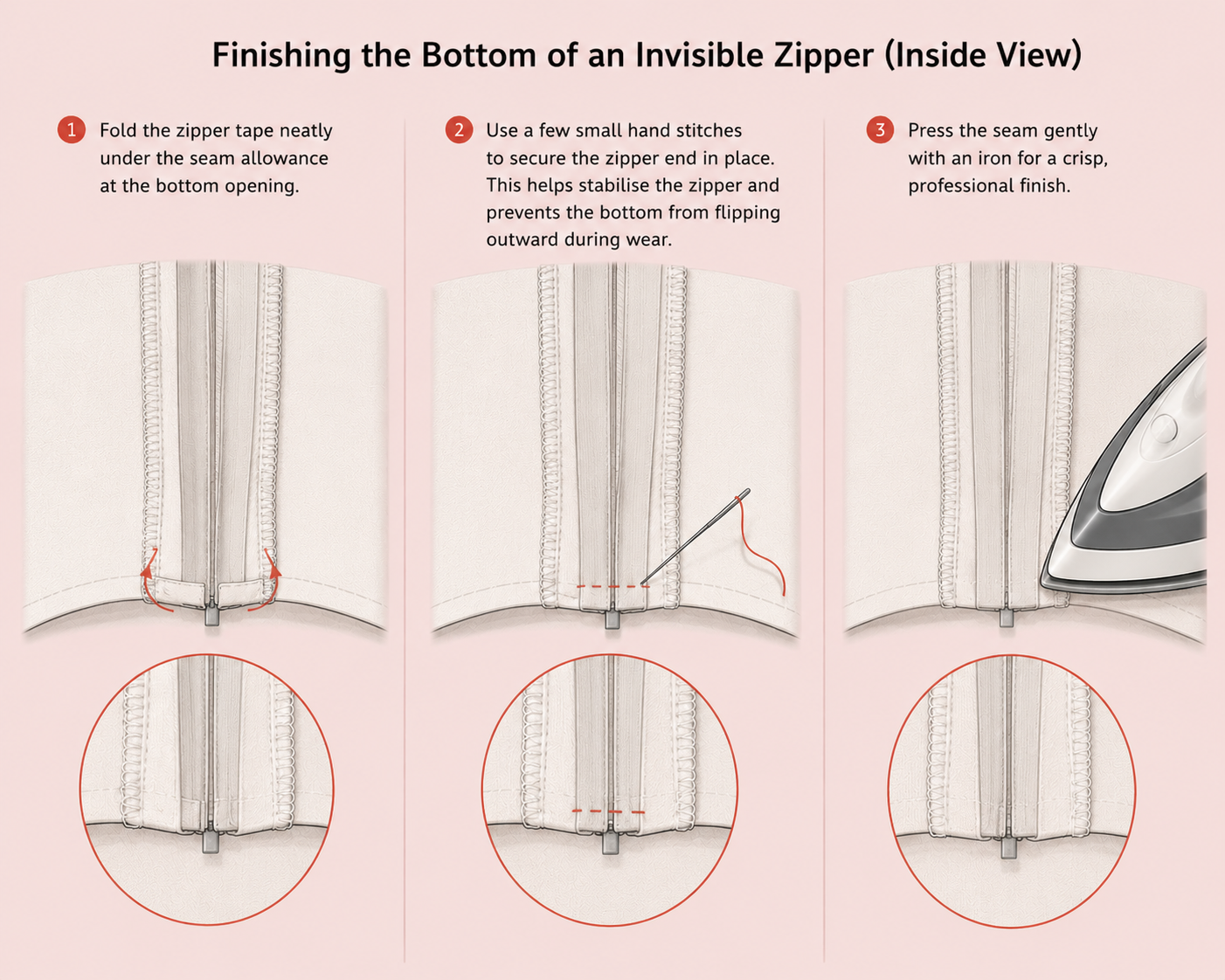
Fold the zipper tape neatly under the seam allowance at the bottom opening.
Use a few small hand stitches to secure the zipper end in place. This helps stabilise the zipper and prevents the bottom from flipping outward during wear.
Press the seam gently with an iron for a crisp, professional finish.
Tips for a Professional Finish
Always press the zipper area lightly before and after sewing.
Use fine pins for delicate fabrics such as silk or chiffon.
Test the zipper on scrap fabric before sewing the actual garment.
Avoid stretching the fabric while stitching.
Hand basting gives much better control for slippery fabrics often used in áo dài construction.
Final Thoughts
A neatly inserted invisible zipper can elevate the overall appearance of an áo dài, giving it a refined and elegant finish. While it may take a little patience at first, mastering this technique will greatly improve the quality of your garment construction.
With careful preparation, accurate alignment, and the right sewing foot, you can achieve a beautifully hidden zipper that complements the timeless beauty of the áo dài.
